
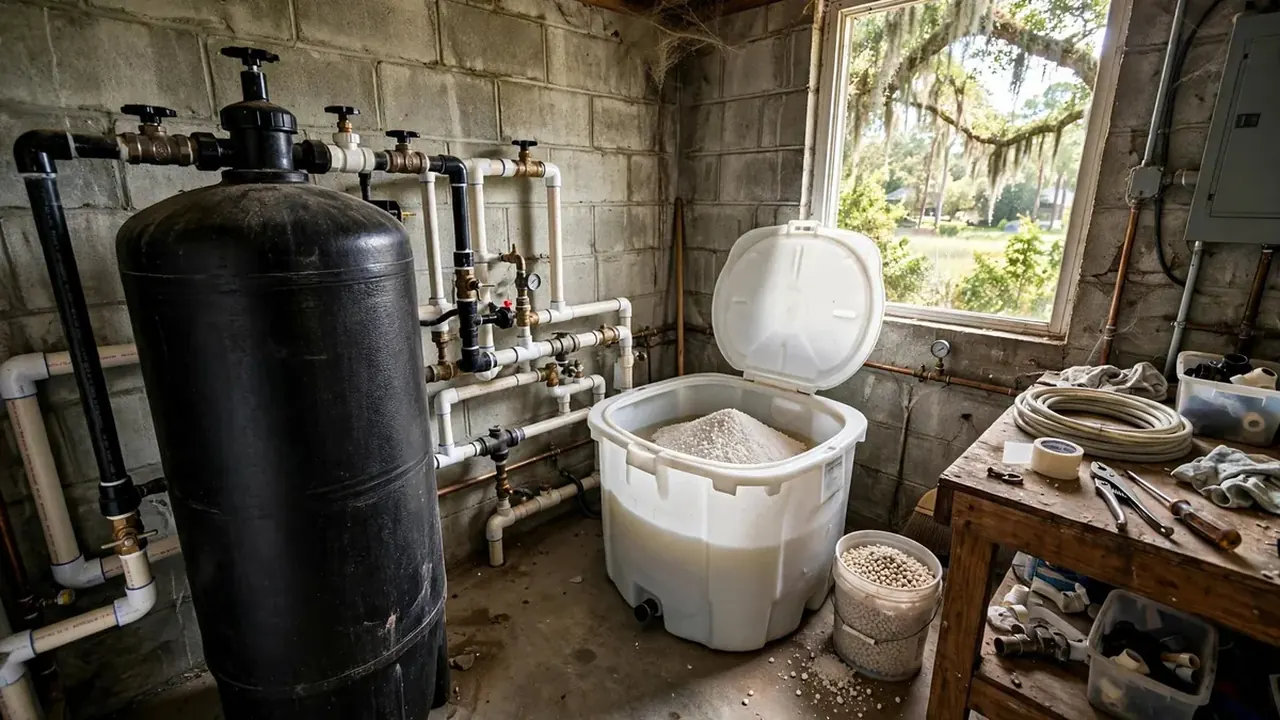
What hard water does inside a house
Hard water carries dissolved calcium and magnesium. When water heats or evaporates, those minerals come out as scale. On a tank water heater, scale builds on the heating element or at the bottom of the tank and forces the heater to work harder and longer. On a tankless unit, scale narrows the heat exchanger, which is why tankless water heaters need regular descaling in hard water.
Fixtures show it too. Aerators clog, showerheads spray unevenly, glass spots, soap lathers poorly and dishwashers and washing machines collect residue. The costliest effect is on equipment that heats water.
What the Citizens Water figures say
Citizens Water reports system-wide hardness averaging about 19 grains per gallon (about 320 mg/L), and the range across its treatment plants is 8.7 to 27 grains per gallon (148 to 460 ppm). These are system figures and they do not name Avon, so ask Citizens for the figure at your address.
A home test strip or lab test gives a number to size a softener against. Water near the hard end of that range is where scale on heaters and fixtures shows up fastest.
How an installation goes
A softener touches the supply, the drain and the electrical outlet, so the order matters.
- 1
Choose the location
Near the main supply, close to a floor drain or standpipe, and next to an outlet. Garages and basements are typical. We check clearance for salt loading.
- 2
Plan outdoor taps
Hose spigots, and often the irrigation, usually stay on untreated water. We set the plumbing so softened water goes to the house and not the lawn.
- 3
Install bypass and connections
A bypass valve lets us isolate the unit for service. Connections are made with approved fittings and the supply is tested for leaks.
- 4
Drain and set up
The regeneration drain gets a proper air gap. We program the unit based on your measured hardness and household size.
Softener, filter or both
Different problems need different equipment.
| Concern | Softener | Filter |
|---|---|---|
| Scale on heaters and fixtures | Yes | No |
| Chlorine taste and odor | No | Carbon filter |
| Lead from old service lines | No | Lead-certified filter |
| Spotted dishes | Yes | No |
| Soap lathering | Yes | No |
Citizens states that lead can enter through service lines and home plumbing and suggests a lead-certified filter for drinking and cooking water.
Planning a softener or replacing one that quit? Call and tell us the setup you have.
☎ Call (317) 740-1302Repairing a softener that has stopped working
A softener that no longer softens often has a simple cause: the salt bridged in the tank, the brine line is clogged, the control valve is stuck or the resin is exhausted. Overflow from the brine tank usually points to a blocked drain line or a failed float.
We check hardness at the tap, look at the salt, the brine well and the valve, and tell you whether the control valve or the whole unit makes sense to replace. Newer softeners with a failed valve often are repairable. Older units with tired resin may not be worth the parts.
Where it connects to the rest of the plumbing
Hot water scale builds fastest, so a softener often saves a water heater from the worst of it. If your heater already shows rusty or scaly water, water heater repair or replacement may be the first job. A new softener is also a good time to check the main shutoff, pressure and any outdoor connections.
For a new build or remodel, softener connections belong with the rest of the rough-in. Permit rules vary by job, so ask the Avon Planning and Building Department.
What not to do when a softener acts up
These steps are about safety first and damage control, not repair.
- Do not bypass the unit permanently, because hard water scale keeps building in the heater and fixtures.
- Do not pour anything other than softener salt into the brine tank.
- If water is leaking from the tank or the drain line, close the bypass valve and call.
- Avoid drinking water from a tap you suspect is crossed with the brine line until a plumber has checked it.
What affects the cost of a softener install
The equipment is only part of the job.
Unit size
Capacity should match household size and measured hardness.
Location
Distance from the main, a drain and an outlet drives the plumbing work.
Outdoor and irrigation plumbing
Keeping taps and sprinklers on untreated water adds branches.
Existing piping
Old or corroded pipe may need replacing near the connections.
Add-ons
Filters and bypass options add equipment.
Homeowners policies typically exclude damage from a failed appliance part itself, but sudden water damage from a failed connection may be covered, so ask your carrier.
Call (317) 740-1302 and we will give you a clear price before work starts.
Codes, licensing and 811
Plumbing work in Indiana follows the state plumbing code (675 IAC 16), and the Indiana Plumbing Commission licenses plumbing contractors and journeyman plumbers. You can check any plumber through the license lookup at mylicense.in.gov before work starts, and you should call 811 before any digging.
Codes and standards decide what is allowed on a given job, so ask which ones apply to yours.
Water softener questions in Avon
The 24/7 line is answered around the clock, and same-day appointments are offered when available. Planned installs are scheduled once we know your setup.
Citizens Water reports system-wide hardness averaging about 19 grains per gallon, and it varies by treatment plant, so ask Citizens for the figure at your address.
No. A softener removes hardness minerals. For chlorine taste, use a carbon filter. For lead, Citizens suggests a lead-certified filter for drinking and cooking water.
Permit rules vary by job, so ask the Avon Planning and Building Department.
Common causes are salt bridging, a clogged brine line, a stuck valve or tired resin. Call and we will check each.
Yes, it slows scale in the heat exchanger. You may still need periodic descaling.