
Reading the pattern: one fixture or the whole house
A single slow sink usually means a clog in the trap or the short branch behind the wall. If the tub gurgles when the washer drains, or a basement floor drain bubbles after someone flushes upstairs, the blockage sits further down, on a shared branch or on the main house drain. The first thing a plumber checks is how many fixtures are affected and in what order.
Drain pipes in a house form a tree. Every fixture has a trap, each trap feeds a branch, and the branches join a main drain that leaves through the foundation toward the sewer lateral. A clog upstream of a junction hurts only the fixtures above it. A clog at the main hurts them all, and the lowest fixture, often a basement shower or floor drain, shows it first.
That is why a drain call starts with questions about where water appears, not with a tool. The answer also tells us whether the job belongs here or on main sewer line cleaning, which uses larger equipment.
When a clogged drain becomes an emergency
Call right away if any of these are happening, and do the following until a plumber arrives.
- Foul or sewage-colored water is coming up in a tub, shower or floor drain.
- More than one fixture is backing up at the same time.
- Water is spreading toward a furnace, a water heater, outlets or finished flooring. Keep people and pets out of that area.
- Stop every fixture and appliance that drains, including the washer, dishwasher and shower.
- Leave chemical drain opener on the shelf. It rarely cuts a hard blockage and it is a skin and eye hazard for the next person to open the trap.
- Do not keep plunging a toilet that is backing up because of a clog somewhere else. The toilet is not the problem.
- If a fixture keeps filling, close the stop valve under it.
Snaking and cabling: matching the cable to the pipe
Cable cleaning is not one tool. The right one depends on pipe size, how far the clog sits and what it is made of.
Hand auger for traps and short branches
A hand-cranked auger about a quarter inch thick reaches the trap and a few feet of branch. It handles hair, soap scum and a dropped object near the fixture. It is the right tool for a bathroom sink and often for a tub.
Drain machine for tubs, laundry and branches
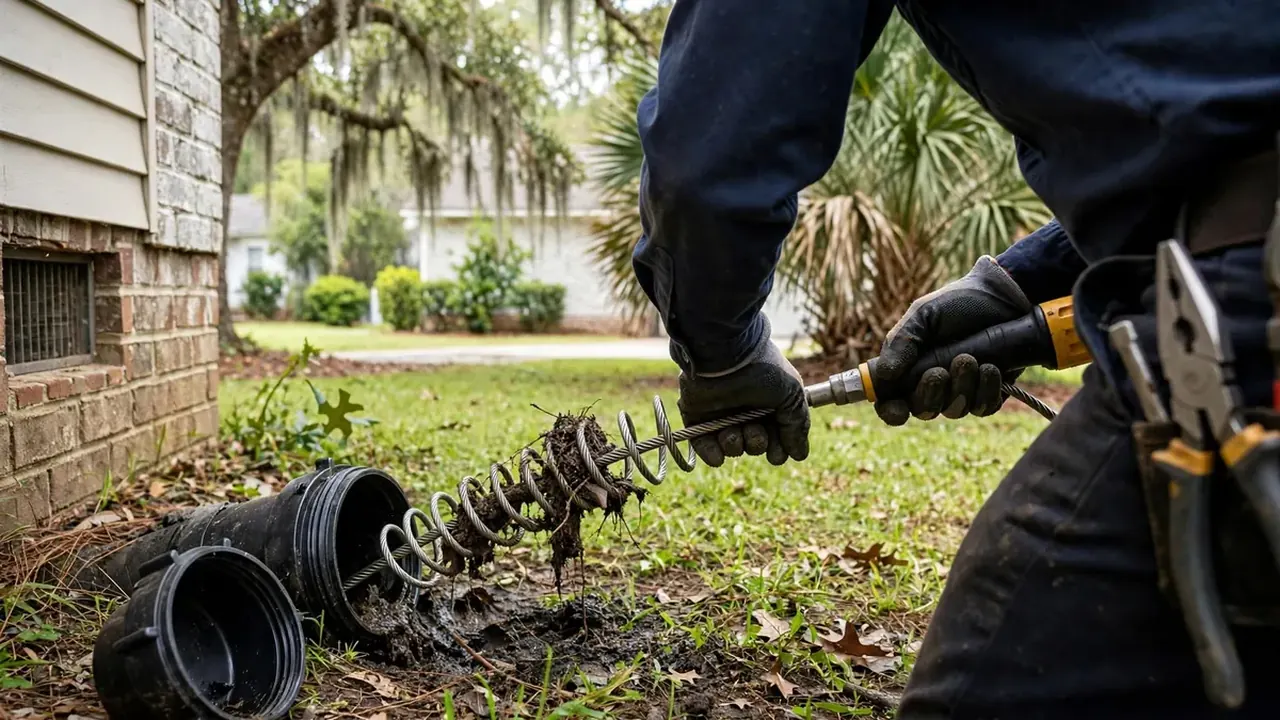
A motorized drum machine feeds a steel cable through a cleanout or the fixture opening. The spinning cable hooks or breaks up the blockage. Size matters: a thin cable bends in a larger pipe and misses the clog, and a thick one can kink in a tight trap.
Cutter heads for roots and grease
Sectional cable with interchangeable heads lets a plumber cut roots or scrape grease from the pipe wall instead of poking a hole through it. A hole through grease closes again within weeks. Scraping the wall restores the pipe diameter, and diameter is what keeps a line flowing.
When cabling stops being the right method
If the cable punches through and the drain slows again soon after, the pipe walls are coated, and hydro jetting fits better because water scours the whole circumference. If the cable stops at the same spot every time, a camera look is smarter than more force on a pipe that may be broken.
Kitchen sink clogs: grease, food solids and the second bay
A kitchen drain collects the worst material in the house: cooking fat, starch, coffee grounds and fibrous scraps. Fat cools on the pipe wall and narrows it a little more with every wash, until a slow drain becomes a standing sink. Hot water moves the fat down the line, where it hardens again past the trap.
Double-bay sinks and disposals add complications. If water from one bay rises in the other, the blockage sits past the joint where they meet. When a disposal is in the line, a plumber works through the trap arm or a cleanout, because pushing cable through the grinder chamber can damage it. A disposal that hums but will not turn is a different problem, covered under garbage disposal repair.
Dishwashers drain through the disposal or the sink trap. A dishwasher that leaves standing water and a sink that gurgles when it runs often share the same partial clog.
Symptom, likely location and first move
These patterns are a starting point. The camera or the cable result settles the question.
| What you see | Where the clog usually sits | First move |
|---|---|---|
| One sink drains slowly | Trap or branch behind the wall | Hand auger at the trap |
| Tub and shower slow together | Shared bathroom branch | Machine through the tub drain or cleanout |
| Washer drain box overflows | Laundry standpipe or branch | Cable through the standpipe |
| Basement floor drain bubbles | Main house drain | Cable from the cleanout, camera if it returns |
| Every fixture is slow or backing up | Main line or lateral | Main line cleaning with a larger cable |
Water rising in a tub or floor drain? Call now and tell us which fixtures are affected.
☎ Call (317) 740-1302When the drain line itself leaks
Some calls that sound like clogs are drain line leaks. Water that shows at a baseboard or behind a shower wall only when a fixture drains, and never when only the supply is on, points to a cracked pipe or a loose joint in the waste line. A slow drain with a damp spot and a sour smell nearby tells the same story.
Cable can make a leaking joint worse, so a plumber checks for dampness and listens before pushing it through. Older cast iron drains tend to rust through along the bottom of the pipe. Those show up in older houses more than in most post-2000 homes around Avon. If the source is not obvious, leak detection covers how a hidden leak gets located.
How a drain cleaning visit runs
The order matters more than the machine.
- 1
Questions before tools
Which fixtures, in what order, since when, and whether anything unusual went down the drain. Those answers narrow the pipe segment to open.
- 2
Find the access point
The plumber uses the nearest route to the blockage: the fixture trap, a cleanout, or a removed toilet when nothing else is reachable.
- 3
Clear it, then test the whole system
After the cable or jetter breaks through, water runs at several fixtures at once. A drain that passes one cup of water can still fail under a full tub.
- 4
Look inside if it keeps returning
Repeat clogs get a camera on the next visit, because a belly, a root or a cracked joint will not stay cleared by cable alone.
- 5
Explain what was found
You hear what caused the clog and what, if anything, to change. The price is stated before work starts.
Avon houses and drain lines
Much of Avon was built during rapid growth after 2000, with the census count rising from 6,248 in 2000 to 21,474 in 2020. Homes from that period generally use plastic drain pipe, which is smooth and resists grease buildup better than old iron. The usual culprits in those houses are debris left in a line during construction and ordinary kitchen grease.
The Town of Avon's utilities page lists West Central Conservatory District for sewer, though service boundaries vary by address. If a floor drain backs up while the house branches run clear, the blockage may be in the lateral, so confirm with the town which utility serves your property before assuming who handles what.
We take the same calls in Brownsburg and the other towns around Avon.
What changes the scope and price of a drain job
No two clogs cost the same, and the drivers are predictable.
Where the clog sits
A trap-level clog is a short job. A blockage deep in a branch or the main takes longer and different equipment.
What the clog is made of
Hair and soap are simple. Roots, hardened grease and collapsed pipe change the method and may call for a camera or a jetter.
Access
A cleanout makes the work quick. With no cleanout, the plumber may need to pull a toilet or work through a roof vent.
Timing
A night, weekend or holiday call can price differently from a planned daytime visit, and the difference is stated before work starts.
Repeat problems
A line that clogs again and again has an underlying cause. Finding it costs more once and less than clearing the same line every few months.
Homeowners policies typically respond to sudden and accidental damage and typically exclude wear, gradual leaks and the failed part itself, so ask your carrier. Some policies sell separate sewer or drain backup coverage, and it helps to know whether you have it before water is on the floor.
Call (317) 740-1302 and we will give you the real number for your job once we know which fixtures are affected.
What to do while you wait for a drain call
These steps are about safety first and damage control, not repair.
- Stop running water into the clogged fixture so the line does not overflow.
- Do not pour liquid drain chemicals into a blockage, because they sit in the pipe and can burn whoever opens it next.
- If several fixtures gurgle or back up together, avoid flushing and running the washer until the main line is checked.
- Clear the area around floor drains and move rugs and stored boxes out of reach of any backup.
When cabling is not enough
Cable clears a blockage but it does not clean a pipe. When roots, scale or years of grease have narrowed a line, the better answer is hydro jetting followed by a camera pass to confirm the pipe is intact.
When the problem is the main line itself, the work moves to sewer line cleaning. When the camera shows a crack, a sag or an offset joint, the job becomes a repair question, which sewer line repair explains method by method.
Codes, licensing and 811
Plumbing work in Indiana follows the state plumbing code (675 IAC 16), and the Indiana Plumbing Commission licenses plumbing contractors and journeyman plumbers. You can check any plumber through the license lookup at mylicense.in.gov before work starts, and you should call 811 before any digging.
Codes and standards decide what is allowed on a given job, so ask which ones apply to yours.
Drain cleaning questions from Avon homeowners
Yes. The line is answered 24/7, and a drain that backs up at two in the morning or on a holiday is dispatched as a same-day appointment when available. Tell us which fixtures are affected and we will say what to shut off in the meantime.
We do not diagnose a blockage over the phone. The pattern you describe only helps us bring the right cable or jetter.
It is better not to. Most products do not cut through a hard blockage, they can sit in a standing line, and the liquid splashes when the trap is opened. If you already used some, tell the plumber so they can wear the right gloves and eye protection.
Grease that coats the pipe wall comes back as soon as the cable hole closes. Running hot water helps only briefly, because the fat hardens again further down the line. A jetting pass or a camera look usually finds the real narrowing.
If several fixtures are slow together, or the lowest drain in the house bubbles when you flush upstairs, the blockage is probably on the main. That is the territory of sewer line cleaning. One slow fixture is almost always a local branch.
Often, yes. Floor drain strainers usually lift or unscrew, and the plumber can then reach the trap and the line below. Painted-over or rusted-in covers may need extra work, so mention it when you call.
Not always. A slow single sink is usually hair and soap in the trap, and lifting the stopper or cleaning the trap sometimes fixes it. If it clogs again within weeks, or the tub and sink slow together, call and describe the pattern.
It can scrape a thin or corroded pipe, which is why a plumber matches the cable and head to the pipe. If the line is old cast iron or has a known weak spot, a camera look before aggressive cleaning is the safer order.