
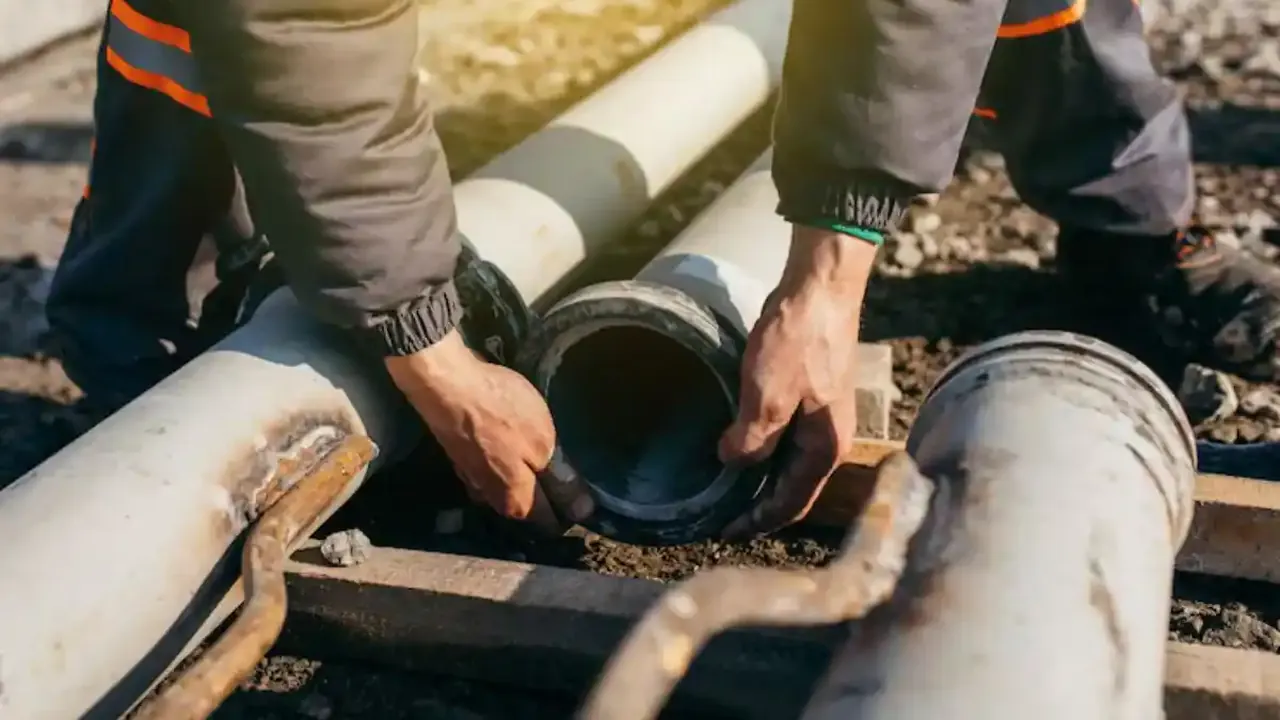
A line that keeps clogging in the same spot is usually damaged
A healthy sewer pipe has a smooth, continuous wall. When it clogs repeatedly, the cause is often a defect that catches waste: a root in a joint, a sag, an offset joint or a crack. Cleaning removes what is in the pipe today but does not change the pipe.
The common failure modes are roots entering at joints, a pipe that settled and created a belly, joints that shifted, cracks from ground movement or heavy loads, and old pipe material that has corroded. Which one you have decides the repair, so the first job is to see inside the line.
Sewer backup right now: steps while you wait
If sewage is coming up, do these things and call.
- Stop using every drain, toilet and washing machine in the house.
- Keep children, pets and bare feet away from the water. Sewage carries bacteria.
- Stay out of a flooded basement if water is near outlets, a panel or a sump pump. Leave electrical items alone.
- Note where the water appears and in what order. Those details help the plumber narrow the break.
- Do not dig in the yard to look for the line. Buried utilities are marked through 811, and digging by hand can still damage a pipe.
- If a patch of lawn is wet, sunken or smells of sewage, mark it and tell us.
How the damage gets found
A good repair starts with a clear picture of the pipe.
- 1
Clear the line
If the pipe is blocked, a plumber opens it first so the camera can travel. This is also the after-hours step, since it restores drainage.
- 2
Run the camera
A camera on a flexible rod travels the pipe and shows cracks, roots, offsets, bellies and collapsed sections. The footage is the basis for every choice that follows, and a standalone sewer inspection works the same way.
- 3
Locate the problem
A transmitter on the camera head lets the plumber find the defect from above ground and measure its depth. That tells you how much digging a repair would take.
- 4
Compare methods
With the footage, the plumber explains which repair methods suit the damage and what each one costs in disruption.
- 5
Plan the work
The repair is scheduled around utility marking, any permit and the weather. The price is stated before work starts.
Repair methods compared
Four ways to fix a sewer pipe. Each has a place and a limit.
Open-cut spot repair
The crew digs to the damaged section, cuts it out and replaces it with new pipe and fittings. It suits damage at one location, such as a single broken joint or crushed section. The trade-off is excavation, so lawn and sometimes pavement need restoring.
Trenchless pipe lining
Cured-in-place lining pulls a resin-soaked liner through the existing pipe and cures it into a new pipe inside the old one. It suits cracks, root-prone joints and corroded pipe that is still round. It reduces the inside diameter slightly and cannot fix a pipe that has collapsed or sagged badly.
Pipe bursting
A bursting head pulls new pipe through the old one, breaking the old pipe outward. It replaces a whole run with limited digging at the ends. It needs a path with enough clearance and is not used where other buried lines are too close.
Full open-trench replacement
The crew excavates and replaces the full run. It is the most disruptive and the most certain method, and it is the right choice when the pipe has several defects, wrong slope or a collapsed section.
Which method fits which damage
A general guide. The footage and the line locator decide.
| Damage | Likely method | Limit |
|---|---|---|
| One broken joint or crushed spot | Spot repair | Excavation at that point |
| Cracks and root entry at joints | Lining or spot repair | Pipe must still be round |
| Long run with several defects | Bursting or full replacement | Needs access and clearance |
| Belly or wrong slope | Spot repair or replacement | Lining cannot fix slope |
| Collapsed section | Excavate and replace | Cannot be lined through |
Same backup coming back after cleanings? Call and describe where and how often.
☎ Call (317) 740-1302Cast iron sewer pipe in older houses
Cast iron was the standard drain material for decades before plastic, and many older houses still have it. It corrodes from the inside, forming scale that narrows the pipe, and it can rust through along the bottom. Cast iron near a foundation or under a slab is often the first to fail.
Most of Avon was built during rapid growth after 2000, so cast iron is less common here than in older neighborhoods, but it turns up in older homes and sometimes in a basement stack. Our Danville plumbing page covers the older housing near a historic downtown, where cast iron is more likely. A camera shows scale, pitting and holes, and the repair choice depends on how much sound pipe remains.
Lining versus digging: how to decide
Choose lining when the pipe is structurally sound enough to hold a liner, the damage is cracks or root entry, and digging would disrupt a driveway, a deck or mature trees. Choose digging when the pipe has collapsed, lost its slope or shows many defects along its length.
Ask for the footage and the locator depth before you decide. A plumber who recommends a method without showing you the pipe has not earned the decision. If the pipe is sound and only coated, hydro jetting may be all it needs.
Digging, 811 and permits
Call 811 before any digging so buried utilities get marked. Permit rules vary by job, so ask the Avon Planning and Building Department at 317-272-0948, which is open Monday through Friday with a closed hour at midday. We work with the permit and inspection steps when they apply.
Sewer lines often run near other buried lines, which is one reason lining or bursting can be easier on a crowded lot.
Septic, if your property is on it
The Town of Avon's utilities page lists West Central Conservatory District for sewer, though service boundaries vary by address, so confirm with the town which service applies to your property. If your property is on septic, the picture changes. The line from the house to the tank is plumbing we can repair, but pumping, drain field work and tank replacement belong to a septic contractor.
A slow-draining house with a septic tank often has a full tank, not a broken pipe, so a pump-out may be the first step. We do not diagnose septic problems over the phone.
What shapes the cost of a sewer repair
Sewer jobs differ a great deal, so the price follows the details below.
Method
Spot repair, lining, bursting and replacement differ in labor, equipment and restoration.
Depth and length
A shallow short repair is a smaller job than a deep or long run.
Restoration
Digging through lawn, driveway or landscaping adds the cost of putting it back.
Permits and inspections
Where a permit applies, it adds a step and sometimes an inspection.
Surprises underground
Rock, other utilities and wet soil change the work, and a good plan states how those are handled.
Homeowners policies typically respond to sudden and accidental damage and typically exclude wear, gradual leaks and the failed part itself, so ask your carrier. Sewer line failure from age or roots is commonly excluded, but some policies offer line coverage as an add-on.
Call (317) 740-1302 for the real number for your line once the camera has shown what it needs.
Codes, licensing and 811
Plumbing work in Indiana follows the state plumbing code (675 IAC 16), and the Indiana Plumbing Commission licenses plumbing contractors and journeyman plumbers. You can check any plumber through the license lookup at mylicense.in.gov before work starts, and you should call 811 before any digging.
Codes and standards decide what is allowed on a given job, so ask which ones apply to yours.
Sewer repair questions
Yes. The line is answered 24/7. A sewage backup at night is handled as a same-day appointment when available, with the first goal of clearing the line so the house is usable. The permanent repair is then planned from the camera footage, since digging at night is rarely safe.
Stop using drains until a plumber has seen the line.
Sometimes. Lining works when the pipe is still round and the damage is cracks or root entry. A collapsed or badly sagging pipe cannot be lined, and the camera shows which case you have.
Manufacturers publish design-life ratings for their liner products, and the actual life depends on installation and the condition of the host pipe. Ask for the product data sheet instead of relying on a general number.
Permit rules vary by job, so ask the Avon Planning and Building Department at 317-272-0948. Excavation also requires an 811 call so buried utilities are marked.
The Town of Avon's utilities page lists West Central Conservatory District for sewer, but service boundaries vary by address and responsibility for the lateral differs by property. Confirm with the town before assuming. We repair the part on your side of that line.
No. Cast iron can last a long time when it stays dry and sound. The concern is pipe with heavy scale, pitting or holes, and a camera look tells you which you have.
We repair the plumbing between the house and the tank. Pumping the tank and fixing the drain field are septic contractor work, and a slow house on septic is often a full tank rather than a pipe problem.
Usually, yes. Sewer line cleaning restores drainage and lets the camera travel the pipe. If the camera shows the cause, the repair plan follows.