
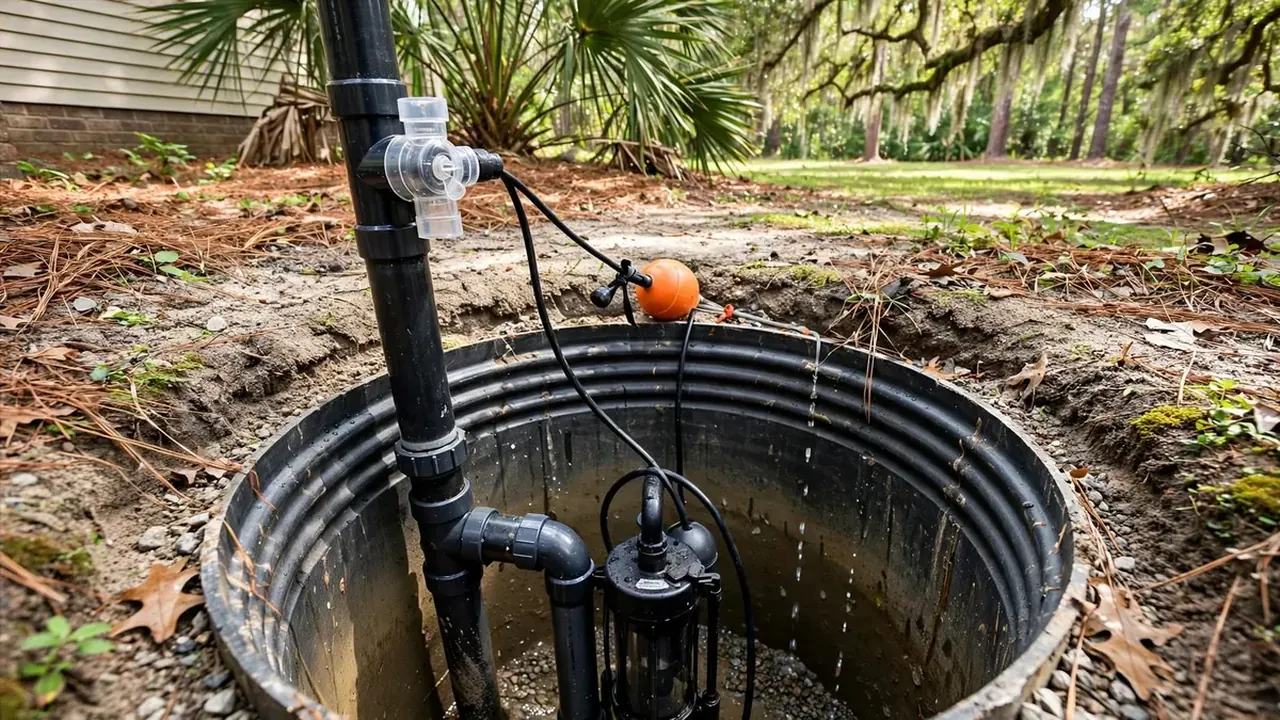
Pit filling in a storm: what to do first
If water is rising in the pit during a storm, the clock is short. Our line is answered 24/7. While you wait, check that the pump is plugged in and its outlet has not tripped, lift the float to see if the pump starts, and bail the pit with a bucket or wet vacuum to buy time.
Stay out of standing water if outlets, power strips or the panel sit near the floor, and shut off power to that area at the breaker if water is close. Move stored boxes, rugs and electronics off the floor. A storm that has already knocked out power also knocks out the pump, which is the case battery backup is built for.
What the pump is doing and what it usually means
The sound or behavior narrows the cause before anyone opens the pit.
| What you see or hear | Likely cause | Typical fix |
|---|---|---|
| Silent, no water movement | No power or tripped GFCI | Reset, test circuit, replace outlet |
| Hums but pumps little or nothing | Jammed impeller or failed motor | Clear debris or replace pump |
| Runs constantly | Stuck float or leaking check valve | Reposition float, replace valve |
| Cycles on and off rapidly | Check valve not holding or pit too small | Replace valve, review pit size |
| Runs but water returns to pit | Discharge line blocked or frozen | Clear line, reroute outlet |
Quick checks before you call
Four of the five common failures show up in a few minutes of looking.
- Confirm the pump is plugged in and the GFCI outlet has not tripped. A tripped outlet is a common reason for silence after a storm.
- Lift the float gently. If the pump starts, the float was stuck on the side of the pit or tangled in the cord.
- Look for debris in the pit. Gravel, mud and fine silt can jam the impeller or hold the float up.
- Check where the discharge line leaves the house. A frozen, crushed or clogged line sends the water straight back to the pit.
- Listen for a clunk after the pump shuts off. That is water draining back through a failed check valve.
Repair or replace the pump
A float switch, a check valve or an outlet is usually a repair. A motor that hums without moving water or that has been cycling for years is closer to the end of its life, and replacing it costs less than coming back each storm. Pedestal pumps sit above the pit and are easier to service, while submersible pumps sit in the water and run quieter.
We look at how often the pump runs, how deep the pit is, and whether the pit is big enough to avoid short cycling. A pump that is just too small for the water coming in will keep failing no matter what part we replace. A new basin or a rerouted outlet falls under plumbing installation work, and we will say if your pit needs it.
Pit full and the pump will not move it? Call and describe what you hear from the pit.
☎ Call (317) 740-1302Sump pump or sewage ejector pump?
A sump pump moves groundwater out of a pit. A sewage ejector pump lifts wastewater from a basement bathroom or laundry up to the main drain, and it works in a sealed basin. They look similar and are not interchangeable, so tell us which you have. A failed ejector means toilets and drains below grade back up, and that is a sanitation problem as well as a flood problem.
Where the discharge goes
A working pump that discharges badly still floods you. The outlet should carry water away from the foundation, not along the wall where it can soak back in. A winter freeze at the end of the line can trap everything behind it.
Avon has a stormwater utility, and its fact sheet notes the town has seen significant population growth. More paved and roofed ground means more runoff to manage, so check town rules on where a sump discharge may go before extending or rerouting the line. The Avon Planning and Building Department is the place to ask.
When the water is not coming from the pump
If the pit is dry or the pump keeps up and the floor is still wet, water is entering somewhere else. Seepage at the wall and floor joint, window wells, a cracked wall or hydrostatic pressure under the slab are drainage problems, and basement waterproofing explains what a plumber handles and when a foundation specialist is the better call.
A wet floor with the pit quiet can also be a plumbing leak. A meter that moves with everything off points to a pipe leak and not the groundwater. We run through both before suggesting any work.
Before we arrive
A little preparation saves time at the pit.
Clear the way
Move stored items back from the pit and the discharge route so we can reach both.
Note the history
Tell us how old the pump is, whether it ran during the last storm and any sounds you heard.
Keep power off near water
If water covers outlets, leave the power off and let us test the circuit safely.
What affects sump pump repair cost
A float swap and a full replacement are very different jobs.
Repair or replacement
A new float or check valve costs less than a new pump with a new basin.
Pump type and size
Submersible, pedestal and higher-capacity pumps differ in cost and in fit for your pit.
Battery backup
A backup system adds equipment and a charger to the job.
Discharge work
Clearing, rerouting or extending the outlet adds time.
Water on the floor
Drying and cleanup are separate from the pump work.
Homeowners policies typically exclude flood and groundwater seepage and often cover sump pump backup only through an added endorsement, so ask your carrier before a storm, not after.
Call (317) 740-1302 and we will give you a clear price before work starts.
Codes, licensing and 811
Plumbing work in Indiana follows the state plumbing code (675 IAC 16), and the Indiana Plumbing Commission licenses plumbing contractors and journeyman plumbers. You can check any plumber through the license lookup at mylicense.in.gov before work starts, and you should call 811 before any digging.
Codes and standards decide what is allowed on a given job, so ask which ones apply to yours.
Sump pump questions in Avon
Yes. The line is answered 24/7 and a failed pump during a storm is treated as urgent. Same-day appointments are offered when available. Do the quick checks while you wait and keep power off if water is near the outlets.
It depends on use, water quality and installation. A pump that cycles often wears faster than one that rarely runs. We assess condition and age, not a fixed number, before we recommend replacement.
If your basement is finished or floods when the power fails, yes, it is worth considering. Storm outages are when pumps run hardest. We can go over backup options during a visit.
Not necessarily. A stuck float or a check valve that lets water drain back both cause constant running. A very wet season can also keep it working. We check which it is.
Check town rules on where a sump discharge may go. The Avon Planning and Building Department can tell you what applies to your property.
No. A sump pump moves groundwater and a sewage ejector lifts wastewater from below-grade fixtures. Tell us which you have so we bring the right parts.