
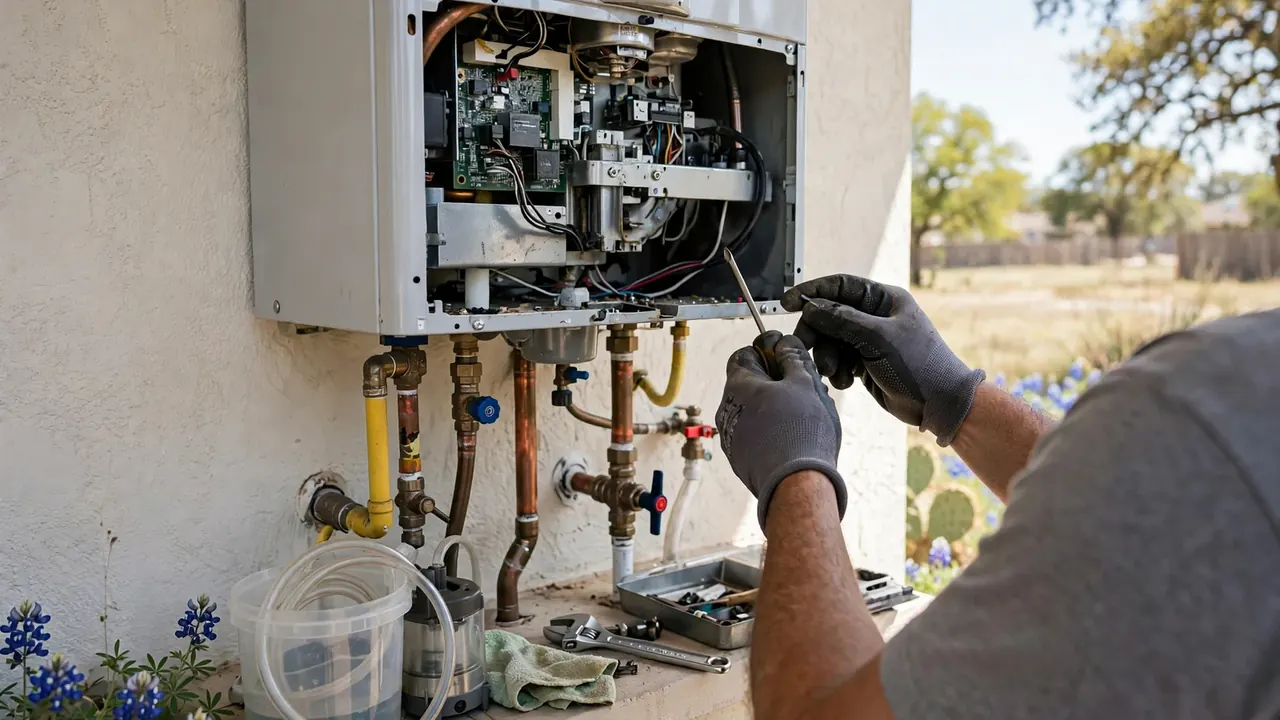
Gas supply sizing: the step buyers skip
A tankless gas heater fires a large burner all at once, so it demands far more gas for a short period than a tank burner does. A line that served a tank heater well may be too small for the new unit, especially if it also feeds a furnace, a range and a dryer.
The plumber adds up the load on the line, measures the length and size of the pipe, and checks the meter and regulator limits. If the line comes up short, the fix is a larger gas line from a point along the run. Any smell of gas means everyone leaves and calls 911 or CenterPoint Energy at 1-800-227-1376 first.
Venting a tankless heater
Exhaust routing and materials depend on the unit.
Condensing units
High-efficiency units extract so much heat that exhaust is cool and acidic. They use plastic vent pipe, produce condensate and need a drain with a neutralizer, so the install needs a nearby drain or condensate pump.
Non-condensing units
These run hotter and use stainless steel vent material rated for the temperature. They need an appropriate vent run and clearances from the manufacturer's instructions.
Swapping a tank for tankless
The old tank's flue is rarely reusable, since tankless vent materials and routes differ. Plan for a new vent run through a wall or the roof and a combustion air path, as covered on our water heater installation page.
Signs your tankless heater needs attention
Several symptoms point to service rather than replacement.
- Water runs hot, then cold, then hot again during a shower.
- The display shows an error code, and the unit shuts down.
- Hot water takes longer to arrive or the flow slows at fixtures.
- You hear rumbling, popping or kettle-like noise during a heating cycle.
- A pilot or ignition fails, or the unit cycles on and off.
- Water is leaking at the unit, connections or relief valve.
Tankless water heater repair
Error codes tell the plumber where to start, but they are not a diagnosis. A code can point to a flame sensor, a flow sensor, a blocked vent, a scaled heat exchanger or a failing board, so the tech checks each against the manual for your model.
Clogged inlet screens, mineral scale and low gas pressure cause many calls. Some faults need the manufacturer's service network, and we will say so plainly. A leaking unit should have its water supply shut off, with gas off only if you smell no gas.
Flushing and descaling a tankless heater
Scale is the usual reason a tankless heater loses output.
- 1
Isolate the unit
The plumber shuts off gas and power, then closes the isolation valves on the hot and cold lines. Units without service valves get them installed first.
- 2
Connect the pump
Hoses link the service ports to a small pump and a bucket of descaling solution, often white vinegar or a manufacturer-approved cleaner.
- 3
Circulate
The solution runs through the heat exchanger for an extended period to dissolve scale, with the plumber checking the color of the return.
- 4
Rinse and restore
The system is flushed with clean water, the inlet screen is cleaned, valves reopen and the unit is test fired.
Call with the model on the label and the symptom, and a plumber will say what the next step is.
☎ Call (317) 740-1302Hard water and tankless units
Citizens Water reports system-wide hardness averaging about 19 grains per gallon, and it varies by treatment plant, so ask Citizens for the figure at your address. Hard water leaves scale inside a narrow heat exchanger, which is why many manufacturers call for periodic descaling and some households add a water softener. If your tap water is hard, tell us when you book, since it changes how often to flush.
Install, repair or flush: which do you need
This table helps match symptoms to a service.
| Situation | Service | What is involved |
|---|---|---|
| New unit replacing a tank | Install | Gas sizing, new vent, drain |
| Error code or shutdowns | Repair | Sensor and vent checks |
| Slow flow, hot-cold swings | Flush | Descale the heat exchanger |
| Unit leaking | Repair | Shut off water, inspect |
| Unit several years old, never serviced | Flush | Preventive descaling |
Service intervals depend on water hardness and the manufacturer.
What affects tankless pricing
Tankless jobs vary more than tank swaps, and these factors shape the quote.
Gas line size
A larger line, if the load requires it, adds pipe and labor.
Venting
New runs through walls or roofs add materials and time.
Condensate
Condensing models need a drain or pump for acidic condensate.
Water quality
Hard water may justify a softener or more frequent flushes.
Unit capacity
Larger units serve more fixtures at once and cost more.
Installation and wear-related service are typically a homeowner expense, while sudden and accidental water damage may be covered, so ask your carrier.
Call (317) 740-1302 and describe your home for a clear price before work starts.
What to do if a tankless unit stops working
These steps are about safety first and damage control, not repair.
- Check the display for an error code and note it before you call.
- If you smell gas, leave the building and call 911 or CenterPoint Energy before doing anything else.
- Do not open the vent or the sealed combustion cover yourself.
- Close the cold supply valve if water is leaking from the unit, and switch off its power.
Outside business hours
Tankless work is mostly planned, but a leak or a no-heat failure can happen at night. The 24/7 line takes those calls too, and the same-day appointments are offered when available. If you need a full heater swap instead, see our water heater replacement page. We cover Danville and the towns along US 36 as well.
Codes, licensing and 811
Plumbing work in Indiana follows the state plumbing code (675 IAC 16), and the Indiana Plumbing Commission licenses plumbing contractors and journeyman plumbers. You can check any plumber through the license lookup at mylicense.in.gov before work starts, and you should call 811 before any digging.
Codes and standards decide what is allowed on a given job, so ask which ones apply to yours.
Tankless water heater questions
Yes. The line at (317) 740-1302 is answered 24/7, so you can call evenings and weekends to schedule an install or flush, and the same line takes leaks and failures.
It depends on water hardness and usage, and the manufacturer's manual sets a baseline. Citizens Water's system-wide average of about 19 grains per gallon varies by plant, so ask Citizens for your address figure.
Maybe not. The plumber totals the appliance load and checks the pipe size and length before recommending a unit.
Usually yes when replacing a tank, because tankless units use different vent materials and often a different route.
It narrows the search but does not diagnose the fault by itself. We do not diagnose codes over the phone. The tech checks the unit.
Call with the model name and symptom, and a plumber will tell you whether it is something we can service.