
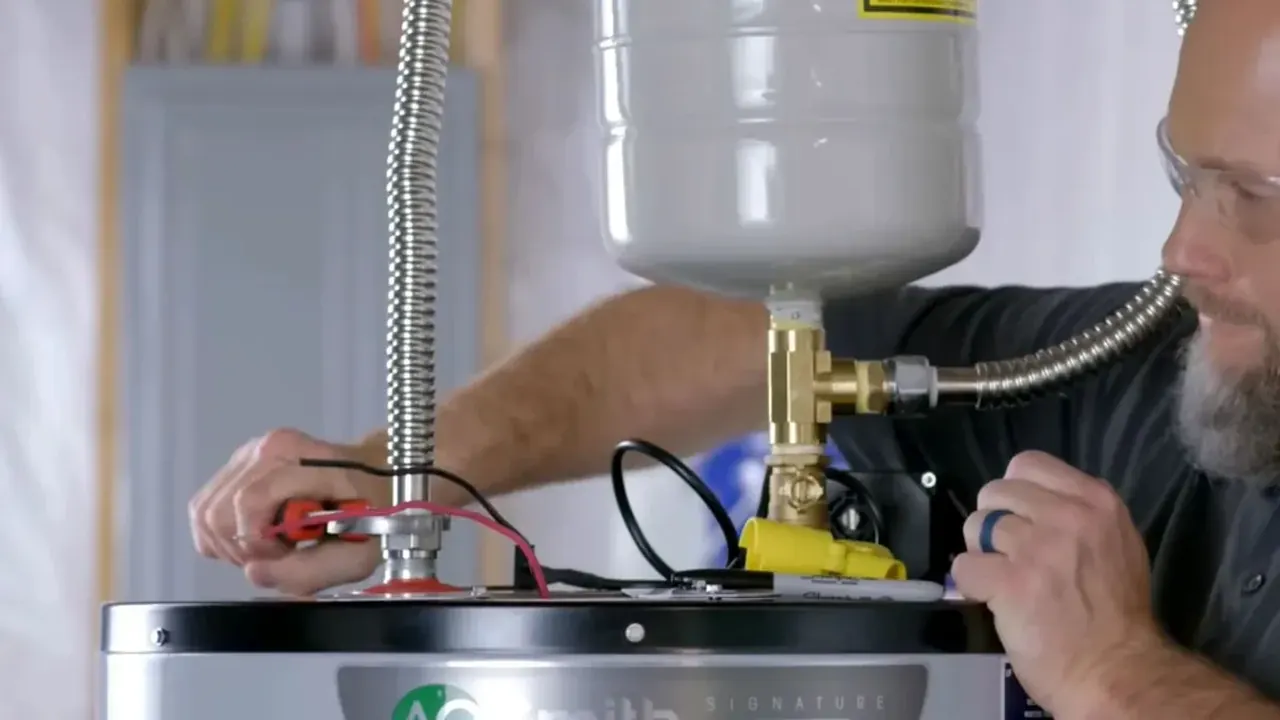
When a failed tank is flooding the room
A tank fails in one of two ways. It either weeps slowly from a corroded seam, or it lets go and empties tens of gallons across the floor in minutes. Either way the repair question is over once the steel shell leaks, because there is no patch that holds against the pressure and heat inside.
The first job is containing the water. Close the cold supply valve on the pipe above the heater, and if you cannot reach it, shut off the main water valve for the house. Then turn off the breaker for an electric unit or the gas control for a gas unit.
While you wait for the plumber
These steps limit damage and make the replacement go faster.
- Do not touch the tank or standing water if it is near outlets, appliances or the electrical panel.
- If you smell gas, leave the building and call 911 or CenterPoint Energy at 1-800-227-1376 before you call us.
- Photograph the water damage and the data plate on the heater for your insurance claim.
- Clear a path to the heater, and move stored items out of the way of the drain and the old tank.
- Note the tank size, fuel type and venting so the plumber can bring the right unit.
- Open a faucet or floor drain if one is nearby to give the water somewhere to go.
Repair or replace: the decision rules
A short set of questions settles most cases. Plumbers weigh these together instead of leaning on a single rule.
| Situation | Points toward | Why |
|---|---|---|
| Leak from the tank shell or seam | Replace | The steel has corroded through |
| Tank is well past a decade old | Replace | More parts will fail soon |
| Bad element, thermostat or valve | Repair | Part is separate from tank |
| Rust-colored hot water, tank interior | Replace | Interior corrosion is advanced |
| Young tank with one failed part | Repair | Remaining life justifies it |
| Frequent repairs in recent seasons | Replace | Repair costs keep stacking |
The serial number on the data plate usually encodes the manufacture date, and a plumber can read it for you.
Repair is still the right call sometimes
Not every cold shower means a dead tank, so a plumber checks the basics before quoting a new unit. A burned-out element, a failed thermostat or a tripped limit switch can all mimic a worn-out heater. Our water heater repair page walks through those symptoms and what gets tested.
The reverse also holds. If the tank has been weeping for a while or the bottom is rusted, adding a new part to a failing shell wastes the money you spent on it.
Why age matters less than the leak
Many tank heaters run about ten years or a little more, but the number is only a rough guide. Hard water, high household demand and a spent anode rod shorten it, while careful maintenance can stretch it. A ten-year-old tank that is dry and working is a different case than a six-year-old tank with a leaking seam.
Tell us the tank size, fuel type and where the water is going, and we can start planning the swap.
☎ Call (317) 740-1302Tank, tankless or heat pump: the replacement options
You can usually swap like for like, but a failure is also the moment to choose a different type.
Conventional tank
A standard gas or electric tank is the simplest swap, because the venting, gas line or circuit already exists. The plumber matches the size to your household, replaces worn supply connections and adds a drain pan and discharge pipe where the code calls for them.
This is also the quickest route to hot water when the old tank has just failed.
Tankless gas or electric
Tankless units heat water on demand and take less floor space. They need adequate gas supply sizing and proper venting for gas models, or heavy electrical capacity for electric ones, so the switch can involve more work than the heater itself.
Our tankless water heater page covers installation, flushing and what to check before you commit.
Heat pump (hybrid)
A hybrid heat pump heater pulls warmth from the surrounding air, so it needs space around it, a condensate drain and a room that can spare some heat. Moving from gas to a heat pump unit also means a new electrical circuit, and the old gas line and vent have to be addressed.
Whether it makes sense depends on the room and your electrical panel, which the plumber assesses on site.
Sizing the new heater to your household
Size depends on how much hot water you use at the same time, not just the number of people. A tank is rated by capacity and by its first-hour rating, which tells you how much hot water it can deliver in the first hour of heavy use. Two bathrooms running at the same time, a soaking tub or a large family laundry day all push the number up.
Much of Avon was built during rapid growth after 2000, and homes from that period often have larger bathrooms and soaking tubs than older houses. If you have added a bathroom or a tub since the original heater went in, the old size may no longer fit. The plumber asks about your fixtures and your shower habits before picking a unit.
What a replacement visit involves
A typical swap follows this order.
- 1
Contain and drain
The plumber shuts off supply and power or gas, then drains the old tank to a floor drain or through hoses outside.
- 2
Remove and prepare
The old unit comes out and the plumber inspects the piping, the shutoff valves, the vent or the electrical connection.
- 3
Set and connect
The new heater goes in with new connectors, a relief valve and discharge pipe, and a pan where required. Gas models get a sediment trap and a leak test at the joints.
- 4
Fill, purge and test
The tank fills and air is purged from the lines. Then power or gas comes back on, and the plumber confirms hot water, the venting and the relief valve.
What affects the price of a replacement
We do not post numbers because every swap differs, but these are the factors that move a quote.
Heater type and size
A heat pump or tankless unit costs more than a standard tank of similar capacity.
Fuel or venting changes
Converting from gas to electric, or changing the vent route, adds labor and parts.
Code updates
A pan, discharge pipe, expansion tank or new shutoff valves may be required to meet code.
Access and haul-away
Tight spaces, stairs and removal of the old tank affect the time on site.
Permit
Permit rules vary by job, so ask the Avon Planning and Building Department at 317-272-0948.
Homeowners policies typically respond to sudden and accidental water damage and typically exclude wear, gradual leaks and the failed heater itself, so ask your carrier about the damage versus the unit.
Call (317) 740-1302 and we will give you a clear price on your replacement before work starts.
Permits and code in Avon
Water heater work in Indiana falls under the state plumbing code, 675 IAC 16, and a replacement in the same location may still need a permit or inspection. The Town of Avon Planning and Building Department handles permit applications through its online portal and is open weekdays at 6570 East US Highway 36, closed daily from 11:30 to 12:30.
Because permit rules vary by job, ask the department what applies to yours before the work starts. We will tell you what the plumber plans to change, such as a new vent, a relocated unit or a gas line, so you can ask the right question.
Night and weekend replacements
A heater that fails at night is the one that floods the house. We answer after hours, and if the tank is already leaking we shut it down first, then work on the swap during the same visit when parts are available. When a same-day install is not possible, the plumber makes the tank safe so you can wait without a flood.
We serve homes across Avon and nearby towns, including Brownsburg to the north, and the same line covers a leak that started in the middle of the night.
Codes, licensing and 811
Plumbing work in Indiana follows the state plumbing code (675 IAC 16), and the Indiana Plumbing Commission licenses plumbing contractors and journeyman plumbers. You can check any plumber through the license lookup at mylicense.in.gov before work starts, and you should call 811 before any digging.
Codes and standards decide what is allowed on a given job, so ask which ones apply to yours.
Questions about replacing a water heater in Avon
Yes. The line at (317) 740-1302 is answered 24/7, and same-day appointments are offered when available. A tank that is flooding the floor is the clearest emergency, and the first step is to shut off the cold supply and power.
We do not promise an arrival time. We do tell you what to shut off while you wait.
Water coming from the tank body or seam means the shell has corroded. Water at a fitting, the drain valve or the relief valve can be fixed with a part. A plumber finds the source before recommending anything.
Often yes, but it is more than a simple swap. A heat pump unit needs a dedicated electrical circuit, space and airflow, and a condensate drain, and the old gas line and venting have to be capped or removed. The plumber checks your panel and the room first.
Permit rules vary by job, so ask the Avon Planning and Building Department at 317-272-0948. Applications go through the town's online portal, and contractors schedule inspections through a contractor portal.
If the tank is old and showing rust, sediment noise or a damp base, planning a swap on your schedule beats a flood. Our water heater installation page explains the planning side.
Yes. Leave the building and call 911 or CenterPoint Energy at 1-800-227-1376 before you call a plumber. Do not turn any switches on or off.