
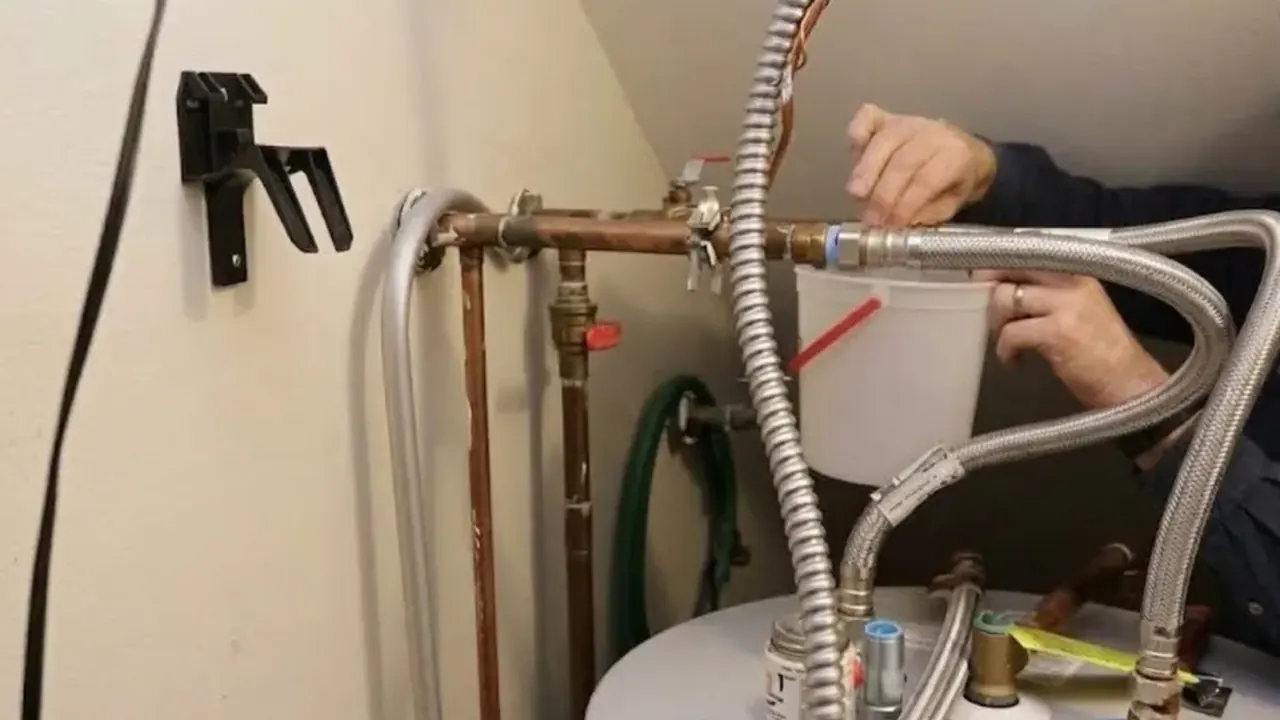
Leaking water heater: what to do first
Most of the damage from a failing tank comes from the minutes after the leak starts. These steps are safe for most homeowners and buy time until the plumber arrives.
- Close the cold water supply valve on the pipe above the tank. The handle runs parallel to the pipe when open and crosses it when closed.
- Turn off power. For an electric heater, flip its double-pole breaker. For gas, set the gas control knob to pilot or off, but only if you smell no gas.
- If you smell gas, do not touch switches or the knob. Leave the building and call 911 or CenterPoint Energy at 1-800-227-1376 before you call a plumber.
- Move boxes and stored items away from the tank, and lay towels or a wet vacuum on the floor to keep water out of finished rooms.
- If water is spreading toward outlets, a furnace or a panel, stay out of the area and shut off the main water valve instead.
Where a water heater leak actually comes from
A puddle under the heater has several possible sources, and only one of them means the tank itself has failed. The plumber dries the unit and traces the water upward, because the real drip is often higher than the puddle.
Common culprits include loose inlet and outlet fittings on top, a weeping drain valve at the bottom, a failed gasket under an electric element, and condensation on a cold tank in a humid room. A leak that comes from the tank seam or jacket is different. Once the steel shell has corroded through, the repair is a replacement, and our water heater replacement page explains how that decision gets made.
Fittings, valves and gaskets can usually be fixed on the spot with the right part. A slow weep is worth fixing early, since the moisture rusts the jacket and the burner area below it.
Gas, electric or hybrid: what breaks on each
The repair depends on how the heater makes heat, so the plumber first reads the data plate and identifies the type.
Gas tank heaters
The common gas failures are a thermocouple that no longer senses the pilot flame, a dirty pilot assembly, a failing gas control valve and a blocked vent or flue. A pilot that keeps going out often points to the thermocouple or to a draft problem, so the tech checks both before replacing parts.
Any smell of gas means everyone leaves the home and calls 911 or the gas utility first, and we do not promise a gas response time.
Electric tank heaters
Electric heaters use an upper and lower heating element controlled by thermostats and a high-limit reset button. When the upper element fails you often get lukewarm water. When the lower one fails, the hot water runs out quickly.
A technician tests each element for continuity with a meter, checks for voltage at the terminals, and inspects the thermostats and wiring. If the breaker trips again right after you reset it, leave it off and call, since that points to a shorted element or damaged wire.
Hybrid heat pump heaters
A hybrid unit pairs a heat pump on top of the tank with backup electric elements. Repairs can involve the fan, the evaporator coil, a clogged condensate drain, an air filter, sensors or the control board, as well as the elements themselves.
Hybrid models have error codes and operating modes that differ by manufacturer, so the first step is reading the display and the manual for that model. If a fault looks like a manufacturer matter, we will say so plainly.
Symptom, likely cause and what gets checked
This table shows how a plumber sorts the common complaints. It is a starting point, not a diagnosis over the phone.
| What you see | Likely cause | First check |
|---|---|---|
| No hot water, electric | Element, thermostat or tripped limit | Meter test and reset button |
| No hot water, gas | Pilot, thermocouple or gas valve | Flame and sensor reading |
| Water pooling at base | Fitting, drain valve or tank | Dry and trace upward |
| Pipe dripping from side | Relief valve discharge | Pressure and temperature |
| Rumbling or popping | Sediment on the tank bottom | Drain a sample, inspect |
| Rust-colored hot water | Corroded tank or anode rod | Compare hot and cold taps |
A leak from the tank shell itself usually ends in replacement.
If the relief valve is discharging
The temperature and pressure (T&P) relief valve is a safety device, and it opens when the tank gets too hot or the pressure rises too high. A steady drip or a burst of water from the discharge pipe is a warning, so do not cap or plug the valve.
The cause is often a thermal expansion problem on a closed system, a failing thermostat that overheats the water, or a worn valve seat. A plumber checks the incoming pressure with a gauge, the thermostat settings and whether an expansion tank is present and charged. If the water coming out is scalding, keep people away from the pipe's end.
Describe what the tank is doing and where the water is showing up, and a plumber will tell you what to shut off next.
☎ Call (317) 740-1302No hot water, or not enough of it
A cold tap and a leaking tank are different problems with different first steps. If nothing is leaking, check the breaker or the pilot light, and look at whether the water simply runs out faster than it used to. That pattern usually means a failed lower element on an electric unit or a thick layer of sediment on a gas one.
The plumber confirms the cause with tests rather than by swapping parts. A broken dip tube is another possibility, since cold water then mixes at the top of the tank.
Anode rods, sediment and why they matter in Avon
The anode rod is a sacrificial metal rod inside the tank that corrodes so the steel does not. Once it is used up, the tank wall starts to rust, which is why a rod inspection or replacement is one of the few maintenance jobs that can extend a heater's life. Sediment settles at the bottom of the tank and insulates the water from the burner or lower element, which causes popping sounds and lost efficiency.
Citizens Water, the water utility the Town of Avon lists for the area, reports system-wide hardness averaging about 19 grains per gallon, and it varies by treatment plant, so ask Citizens for the figure at your address. Hard water leaves more scale on elements and tank bottoms. If your home gets hard water, expect sediment to build faster, and a periodic flush or a water softener can help.
How a repair visit goes
The order matters, because the goal is to fix what is actually wrong.
- 1
Make it safe
The plumber confirms power and gas are off, closes the supply, and checks for gas odor or active water spread.
- 2
Find the cause
Testing replaces guessing. That means meter checks on electric parts, flame and draft checks on gas, and pressure readings on the plumbing.
- 3
Explain the options
You hear whether the answer is a part, a service flush or a new heater, and the clear price is stated before work starts.
- 4
Fix and verify
After the repair the plumber restores power or gas, purges air, and confirms hot water at a fixture and that the relief valve is not weeping.
What drives the cost of a water heater repair
We do not quote a number without seeing the heater, because the same symptom can have very different causes.
Failed part
An element, thermostat, thermocouple or valve costs far less to fix than a control board or a leaking tank.
Heater type
Gas, electric and hybrid units use different parts and take different amounts of diagnostic time.
Access and location
A heater in a tight closet or crowded garage takes longer to work around than one with open clearance.
Heater age
The plumber weighs the repair against the tank's remaining life.
Code issues
A missing discharge pipe or expansion tank may need to be added to meet the plumbing code.
Homeowners policies typically respond to sudden and accidental water damage and typically exclude wear, gradual leaks and the failed heater itself, so ask your carrier what applies to your policy.
Call (317) 740-1302 for a clear price on your heater before any work begins.
After hours and weekend heater problems
Water heaters tend to fail when demand is highest, which means early mornings, cold snaps and holiday guests. Our line is open at night and on weekends, and same-day appointments are offered when available, so a cold shower does not have to wait for Monday.
A leaking tank is the case that should not wait. If you cannot reach the shutoff valve, close the main water valve for the house and call, and read our leak detection page if you suspect the water is coming from somewhere other than the heater. If you live south of Avon, the same line covers Plainfield too.
Codes, licensing and 811
Plumbing work in Indiana follows the state plumbing code (675 IAC 16), and the Indiana Plumbing Commission licenses plumbing contractors and journeyman plumbers. You can check any plumber through the license lookup at mylicense.in.gov before work starts, and you should call 811 before any digging.
Codes and standards decide what is allowed on a given job, so ask which ones apply to yours.
Water heater repair questions from Avon homeowners
Yes. The line at (317) 740-1302 is answered 24/7, and same-day appointments are offered when available. A leaking tank, a flooding basement or a relief valve running hard are the situations we treat as urgent.
While you wait, close the cold supply valve, turn off power or set the gas knob to off (only if you smell no gas), and keep people away from wet electrical areas.
The pipe attached to the relief valve drips when the tank is relieving pressure or temperature. Common causes are thermal expansion, a thermostat set too high or a worn valve. A plumber measures the water pressure and checks the thermostat, because simply replacing the valve may not fix the cause.
Leave the building right away and call 911 or CenterPoint Energy at 1-800-227-1376 from outside. Do not use switches, phones inside the house, or the gas knob. Call us after the gas utility or emergency services have cleared the home.
Yes, we diagnose hybrid units, including the electric elements, condensate drain, sensors and fan. Some control board or sealed-system faults may need the manufacturer's service network, and we will say so if that applies.
It depends on your water and your usage. Harder water builds sediment faster, so ask Citizens Water for the hardness figure at your address and flush the tank more often if it is high.
Yes. A plumber will explain the options and the clear price before any work starts. The decision rules are on our water heater replacement page.