
What changes the timeline
The labor is similar across jobs, but the number of separate steps is not. This table shows which situations add time and why.
| Situation | Why it takes longer | When you learn it |
|---|---|---|
| Like-for-like swap | Draining, disconnecting, setting and refilling are the whole job | At the first call |
| Fuel switch, such as gas to electric | New circuit or gas capping, plus permit work | At the first call |
| New or longer venting | Vent route, sealing and inspection take separate steps | On site |
| Tight attic or closet | Moving a full tank takes more care and hands | From photos or on site |
| Corroded valves or fittings | Old parts must be replaced before new ones go on | After the old tank comes out |
| Permit and inspection | Inspection is scheduled by the building department | Before work starts |
Why a simple swap can still become two visits
Most surprises appear after the old tank is out. Corroded shutoff valves, a brittle gas flex connector or a rusted vent section cannot be reused safely, and a missing part may mean a trip to the supply house.
A second visit also happens when a permit inspection must be passed before the job is considered done, or when a drain pan, expansion tank or electrical circuit has to be added.
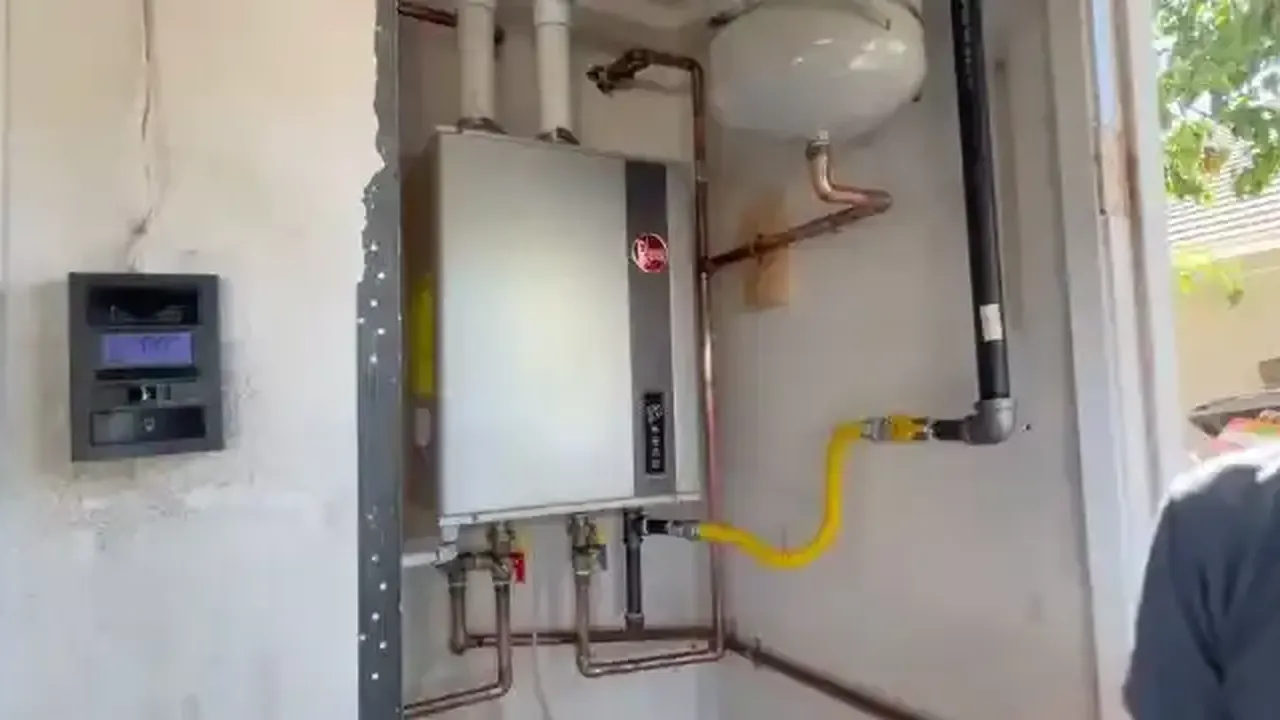
None of this is predictable from the street. A photo of the heater, its vent and the surrounding pipes, plus the data plate, lets a technician flag likely extras before the day of the job.
The phases of a typical install
The order is the same on almost every job, and each phase has its own variables.
- 1
Shut off and drain the old tank
Water, fuel and power are turned off. A tank with heavy sediment drains slowly, and a stuck drain valve can hold the job up.
- 2
Disconnect and remove the old unit
Gas or electrical connections, water lines, the relief line and the vent come off. The old tank is heavy when it still holds water, so stairs and tight turns matter.
- 3
Set the new heater and connect it
The new tank is leveled on a drain pan, then water, venting, relief line and fuel or power are connected, and an expansion tank is added when required.
- 4
Fill and purge the air
The tank fills with the hot tap open, which pushes air out of the lines. Skipping this step causes sputtering and poor first results.
- 5
Start up and test
The unit is lit or powered, the venting is checked and the relief valve is verified. A leak test and a safety check come before the old tank leaves.
- 6
Wait for the tank to heat
A new tank must heat a full volume of cold water, and the time depends on the fuel, the burner or element rating and the tank size.
Heat-up time is part of the schedule
Even a perfect install does not give hot water the moment the pilot lights. A 50-gallon tank starts full of cold water, and gas, electric and heat pump units recover at different speeds.
Plan showers and laundry for after the heater has had time to catch up, and leave the dishwasher off until you see steady hot water at a tap.
To map the steps for your own heater, call and describe where it sits and how it is vented.
☎ Call (317) 740-1302Avon note: permits and inspection scheduling
The Town of Avon Planning and Building Department is at 6570 East US Highway 36, phone 317-272-0948. It is open Monday to Friday from 8 to 4:30 and closed daily from 11:30 to 12:30. Permit applications are submitted online through the town portal, and contractors use a contractor portal to schedule inspections.
So if your job needs a permit, the inspection depends on the department's weekday hours, not only on the plumber's calendar. Permit rules vary by job, so ask the department what applies to a water heater replacement or a fuel change before you pick a date.
Source type: Town of Avon Building Department pageHow to prepare so the job goes smoothly
A few minutes of preparation can remove delays on the day.
- Clear about three feet around the heater and a path to it, including stairs and doorways.
- Locate and test the main water shutoff, and make sure it closes fully.
- Photograph the data plate, the vent and the surrounding pipes for your records.
- Plan to have no hot water for a stretch, and arrange showers and laundry around it.
- Secure pets and move valuables out of the work area.
- If you smell gas at any point, leave the building and call 911 or the gas utility first.
What you can do yourself and what to leave to a plumber
You can prepare the space, clear a path, and take photos. You can also flush an old tank for maintenance, although a heater that is leaking should be replaced, not drained and kept.
Everything else involves fuel, venting and pressurized water, so it belongs to a licensed plumber. Read about water heater installation for a planned swap or water heater replacement when the old tank has failed. Customers in Brownsburg and Danville face the same variables and the same sequence.
Emergency swaps versus planned ones
A tank that has failed and is flooding a utility room changes the order of operations. Water is shut off, the area is made safe, and installation follows once the space is dry.
A planned swap lets you pick a day, settle the permit question and have parts ready. If your heater is old, replacing it before it fails removes the flood risk and gives you control of the calendar.
Codes, licensing and 811
Plumbing work in Indiana follows the state plumbing code (675 IAC 16), and the Indiana Plumbing Commission licenses plumbing contractors and journeyman plumbers. You can check any plumber through the license lookup at mylicense.in.gov before work starts, and you should call 811 before any digging.
Codes and standards decide what is allowed on a given job, so ask which ones apply to yours.
Water heater timing questions answered
You will have no hot water during the swap, and cold water is off while the old tank is disconnected and the new one is connected. Ask your installer how long water will be off for your setup.
It can. It needs space for airflow, a condensate drain and sometimes a dedicated circuit, so there are more steps than a basic swap.
Same-day appointments are offered when available. Whether a particular job finishes the same day depends on the fuel, the venting and whether a permit inspection is needed.
Contractors schedule through the contractor portal, and the Avon Planning and Building Department is open Monday to Friday from 8 to 4:30, closed from 11:30 to 12:30. Call 317-272-0948 to confirm what your job needs.
Turn off the water supply to the tank and the power or gas to the unit if you can do so safely, then call. A leaking tank cannot be repaired.