
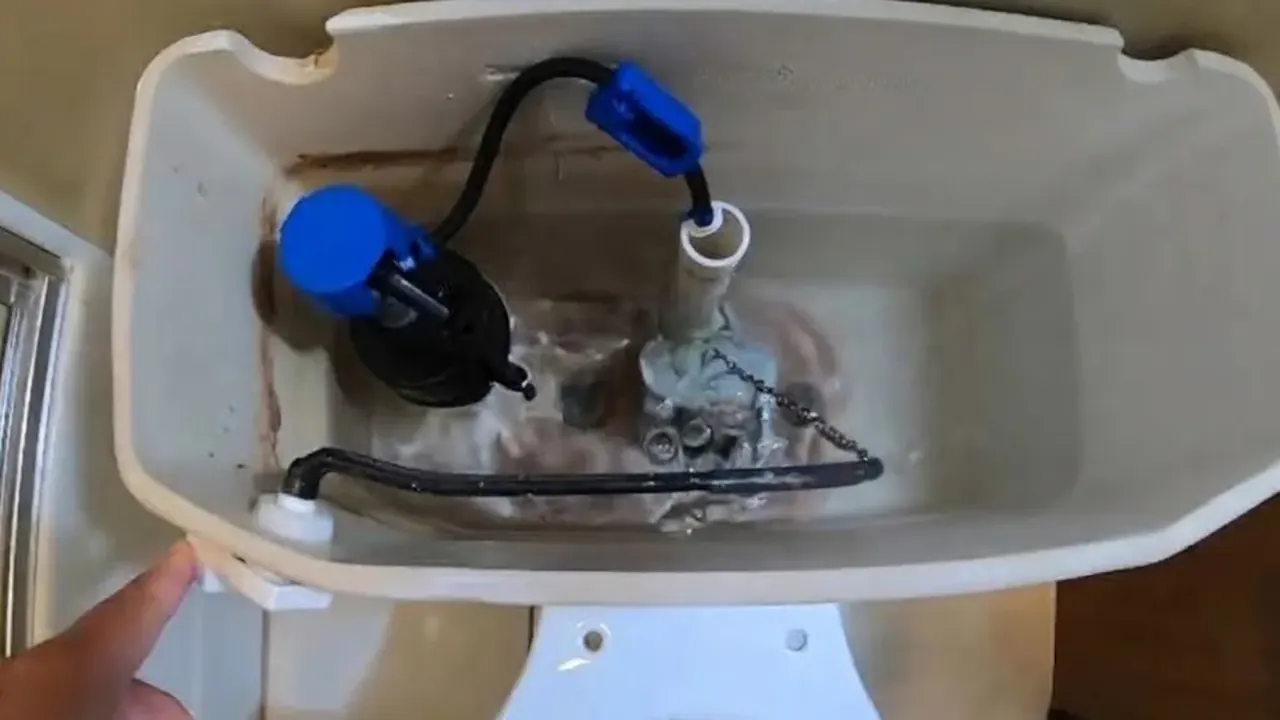
Check the chain before you buy a new lever
A flush handle does two things: it pivots, and it pulls a chain that lifts the flapper. If the chain has too much slack, the lever moves but the flapper barely opens, and the flush feels weak. If it has too little, the flapper never fully seats and the tank refills all day.
Remove the tank lid and push the handle down. The flapper should lift fully, and at rest the chain should hang with only about half an inch of slack. If that adjustment fixes it, you do not need a new lever.
Pick a lever that fits your tank
A lever that looks right in the store can still not fit, because mounting position and arm length vary.
Front-mount lever
The handle sits on the front face of the tank, directly over the flapper chain. This is the most common arrangement and the easiest to replace, since the arm swings straight back toward the flapper.
Side-mount lever
The handle sits on the left or right side, so the arm must turn toward the center of the tank. Match the arm length carefully, because a short arm will not reach the chain and a long arm may bump the tank wall.
Angle-fit lever
The handle mounts at a corner or on a tank with a curved lid. Angle levers use a bent arm, and they are sold for specific tank shapes, so check the existing arm before you shop.
Dual-flush systems
Dual-flush toilets use a push button or two-part handle linked to a canister valve, not a flapper and chain. Those parts are model-specific, so use the manufacturer's part number.
Replace the lever in six moves
Plan on a short job with a sponge, a bucket and an adjustable wrench.
- 1
Shut off the water and empty the tank
Turn the supply valve on the wall clockwise to close it, then flush to drain the tank. Sponge out the last inch of water so the area around the hole is dry.
- 2
Unhook the chain from the old arm
Lift the clip or chain link off the lever arm. Note which link was attached so you can set the new slack in the same spot.
- 3
Loosen the mounting nut clockwise
This nut is reverse-threaded, so it loosens clockwise. Turning it the usual way tightens it and can crack the tank, so go slowly and support the tank with your other hand.
- 4
Fit the new lever from the inside
Slide the shaft through the hole, thread the nut on counterclockwise, and hand-tighten it with a quarter turn of a wrench. Do not overtighten, because porcelain cracks under point pressure.
- 5
Reconnect the chain and set the slack
Hook the chain to the new arm so it hangs with about half an inch of slack. Excess chain can slip under the flapper, so trim or tuck any tail.
- 6
Turn the water on and test
Open the supply valve, let the tank fill, and flush several times. Watch that the flapper lifts, closes cleanly, and the water stops at the fill line.
If the lever swap does not restore a full flush, call and describe whether the problem is a weak flush or water that keeps running.
☎ Call (317) 740-1302When the lever is not the real problem
If a new lever does not fix the symptom, look at these in order.
- The flapper is warped, stiff or coated with scale and does not seal, so water leaks from tank to bowl.
- The chain is tangled, too long or caught beneath the flapper.
- The fill valve is set too low, so the tank never holds a full charge.
- The overflow tube is cracked, which bleeds water into the bowl.
- The tank bolts or the gasket between tank and bowl are leaking onto the floor.
- The toilet itself is slow because of a partial clog in the bowl or trap.
Doing it yourself versus calling
A lever swap is one of the easiest plumbing repairs to do yourself. You need no special tools, and the worst outcome is a bucket of tank water on the floor. The risk is cracking the tank by overtightening the mounting nut or forcing the nut in the wrong direction.
Call a plumber if the tank is cracked, if water appears at the base of the toilet, or if the toilet runs after you have replaced the lever, chain and flapper. A technician can often tell from the sound whether the issue is a leaking seal or a failing fill valve. For the underlying fixture, see toilet repair and, if you are replacing the whole toilet, plumbing installation.
Avon note: the water that sits in your tank
Citizens adds chlorine and a small amount of ammonia to keep disinfectant lasting through the system, and it reports system-wide hardness averaging about 19 grains per gallon that varies by treatment plant. Ask Citizens for the figure at your address. Rubber flappers sit in that treated water all day and stiffen as they age, and mineral scale can roughen the flapper seat.
So when you open the tank for a lever, run a finger along the flapper. If it feels brittle or leaves a film on your fingertips, replace it at the same time, since a leaking flapper makes the new lever look as if it did nothing.
Source type: Citizens Energy Group published water quality reportsIf the toilet is older or the tank is worn
An older tank in Avon, Brownsburg or Danville can have hardware that no longer matches modern parts. In that case, bring the old lever to the store and compare the arm length, thread and nut size, or look for the manufacturer's part number on the tank lid.
Codes, licensing and 811
Plumbing work in Indiana follows the state plumbing code (675 IAC 16), and the Indiana Plumbing Commission licenses plumbing contractors and journeyman plumbers. You can check any plumber through the license lookup at mylicense.in.gov before work starts, and you should call 811 before any digging.
Codes and standards decide what is allowed on a given job, so ask which ones apply to yours.
Toilet handle questions answered
The mounting nut inside the tank has usually worked loose, or the lever arm has slipped on the shaft. Tighten the nut by turning it counterclockwise, and remember it is reverse-threaded.
The chain is likely too long, the flapper is closing early, or the lever is bent. Take up the slack in the chain first, then look at the flapper.
Shutting it off makes the job cleaner, because you can empty the tank and keep the work area dry. You can technically leave it on, but the tank will keep refilling while you work.
A lever swap is a minor repair of an existing fixture. Permit rules vary by job, so ask the Avon Planning and Building Department at 317-272-0948, open Monday to Friday with a midday closure, especially if you are replacing the whole toilet or changing any piping.
No. Mounting position, arm length and the diameter of the shaft hole all matter. Match the existing lever or use the manufacturer's part number.