
The formula and why it works
One BTU raises one pound of water by one degree Fahrenheit. A gallon of water weighs about 8.34 pounds, and a gallon-per-minute flow is 60 gallons an hour, so heating one gallon per minute by one degree takes roughly 500 BTU per hour.
That is where the 500 comes from. Multiply your flow in gallons per minute by the temperature rise in degrees and by 500, and you have the heat output required. A rated input is higher, because no burner turns all its fuel into water heat.
Four steps to a sizing number
Work through them in order, using your own fixtures.
- 1
List what runs at the same time
Add up the peak flow of the fixtures that are likely to run together, such as two showers and a kitchen tap. Do not add every fixture in the house.
- 2
Find your temperature rise
Subtract the incoming cold water temperature from the target output temperature. Cold water is colder in winter, so size for your coldest month, and measure your own tap or ask your installer.
- 3
Multiply to get required output
Flow times rise times 500 gives BTU per hour of heat that must reach the water.
- 4
Divide by efficiency to get input
Divide the output by the unit's efficiency, expressed as a decimal. A condensing unit near 0.9 to 0.95 needs a bit more input than the output figure.
Typical fixture flow rates to start from
These are common planning figures. Check the label on your own fixtures, since older ones can run higher.
| Fixture | Planning flow | Note |
|---|---|---|
| Showerhead | About 2.0 to 2.5 gpm | WaterSense models cap at 2.0 gpm |
| Bathroom faucet | About 1.0 to 1.5 gpm | Lower on WaterSense faucets |
| Kitchen faucet | About 1.5 to 2.2 gpm | Higher when fully open |
| Dishwasher | About 1 to 2 gpm | Varies by cycle and model |
| Clothes washer | About 1.5 to 2 gpm | Depends on cycle |
Most showers mix hot and cold, so the heater delivers less than the full showerhead flow, but plan with the full figure to leave margin.
A worked example
Say two showers at about 2.0 gpm each and a kitchen tap at about 1.5 gpm run at once, for 5.5 gpm of hot water. If the cold water is around 55 degrees and you want 115, the rise is 60 degrees. Then 5.5 x 60 x 500 gives about 165,000 BTU per hour of output.
At roughly 94 percent efficiency, that points to a unit with an input near 175,000 BTU per hour. This is an illustration, not a recommendation, because your flow, rise and fixtures will differ.
For a sizing check on your own house, call and list the showers, tubs and appliances that tend to run at the same time.
☎ Call (317) 740-1302The gas line is the usual surprise
A tank-type gas heater fires at a modest rate, but a tankless unit calls for its full input all at once. Natural gas carries roughly 1,000 BTU per cubic foot, so a large unit pulls a lot of volume at the same time as the furnace and range.
Many homes need a larger gas supply pipe, a different regulator or both. Ask your gas utility whether the meter and service line can carry the added load. If you smell gas at any time, leave the building and call 911 or the gas utility first.
Venting and installation options
The vent type changes where the heater can go and what it costs to install.
Condensing units
These recover extra heat from the exhaust and run cool enough to vent through plastic pipe. They also produce acidic condensate that needs a drain and, in many cases, a neutralizer.
Non-condensing units
These run hotter exhaust that needs stainless steel venting rated for the purpose. Efficiency is lower, and the vent is more expensive and heavier.
Air supply
A heater in a closet or small room needs enough combustion air. Direct-vent models draw outside air through a second pipe, which avoids the problem.
Power and condensate
Even gas tankless units need an electrical connection for fans and controls. Plan for an outlet and a drain nearby.
Avon note: hard water, scale and your tankless heater
Citizens Water reports system-wide hardness averaging about 19 grains per gallon, and it varies by treatment plant, so ask Citizens for the figure at your address. Hardness leaves scale inside the narrow passages of a tankless heat exchanger, which lowers efficiency and can cause error codes.
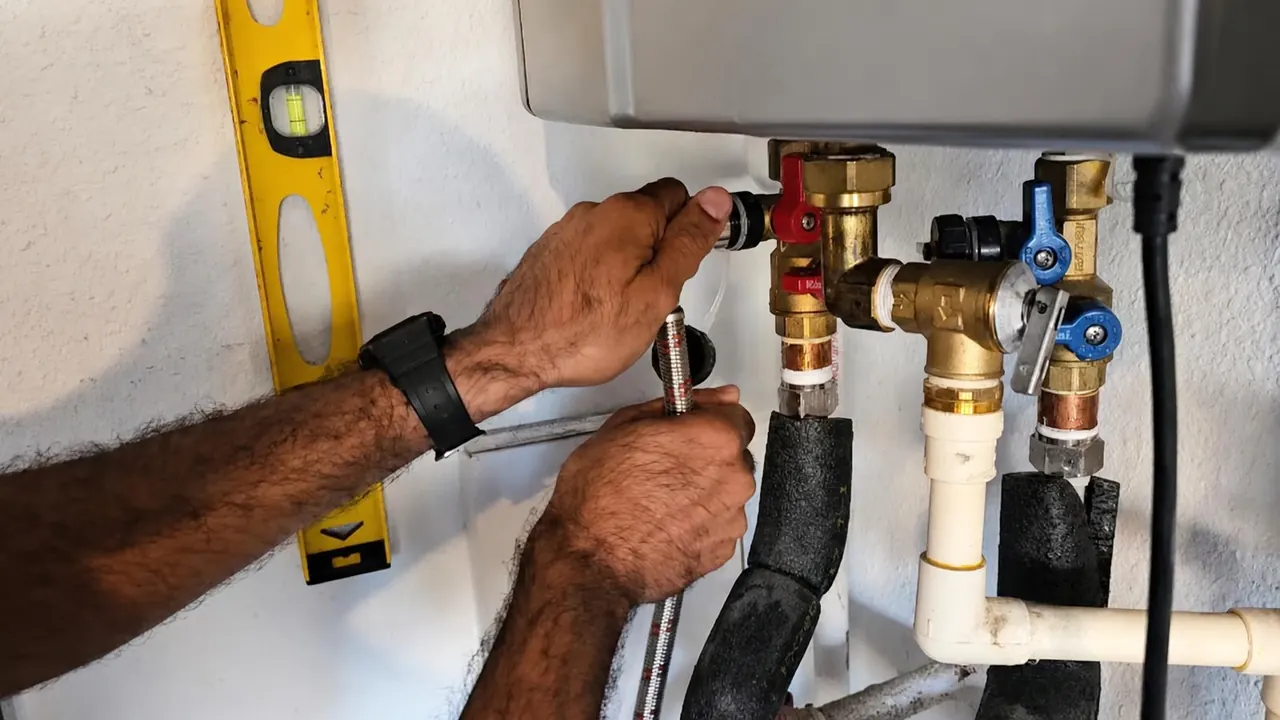
Plan on isolation valves so the unit can be flushed with a descaling solution on a regular schedule, and ask your installer about a sediment filter or water conditioning. The Town of Avon lists CenterPoint Energy for gas, so that utility is the right contact for questions about meter capacity, and the Avon Planning and Building Department can tell you what permit your job needs.
Source type: Citizens Energy Group water quality reports and the Town of Avon Local Utilities pageWhat you can do yourself versus when to call
Sizing is a homeowner exercise. Installation is not.
- You can list fixtures, measure flow with a bucket and a timer, and note peak simultaneous use.
- You can flush a tankless unit if the isolation valves are installed and the instructions are clear.
- Call for gas piping, regulator work, venting and any electrical connection.
- Call if the unit shows an error code that returns after a flush.
- Call if the unit will not light or runs cold and hot in turns.
Next steps
If you want a pro to confirm the math, learn more about tankless water heater service or plumbing installation for gas line work. Homeowners in Brownsburg and Danville face the same sizing rules, and the same gas line questions.
Codes, licensing and 811
Plumbing work in Indiana follows the state plumbing code (675 IAC 16), and the Indiana Plumbing Commission licenses plumbing contractors and journeyman plumbers. You can check any plumber through the license lookup at mylicense.in.gov before work starts, and you should call 811 before any digging.
Codes and standards decide what is allowed on a given job, so ask which ones apply to yours.
Tankless sizing questions answered
That is a rough shortcut for tank heaters. A tankless unit is sized by peak flow and temperature rise, so a small home with three showers running together may need more than a larger home with one.
Water temperature drops or the flow is restricted when demand is high. The heater cannot add heat faster than its rating, so extra fixtures simply get cooler water.
Some manufacturers set water quality limits, so read the warranty. Ask Citizens for the hardness figure at your address, then ask your installer about treatment.
It can. Ask CenterPoint Energy, the gas utility listed on the Town of Avon's utilities page, whether the meter and service line can carry the added load. Leave the building and call 911 or the utility if you ever smell gas.
It depends on use. The savings come from not heating a stored tank, but installation needs a larger gas line and a vent, which can offset the gain.