
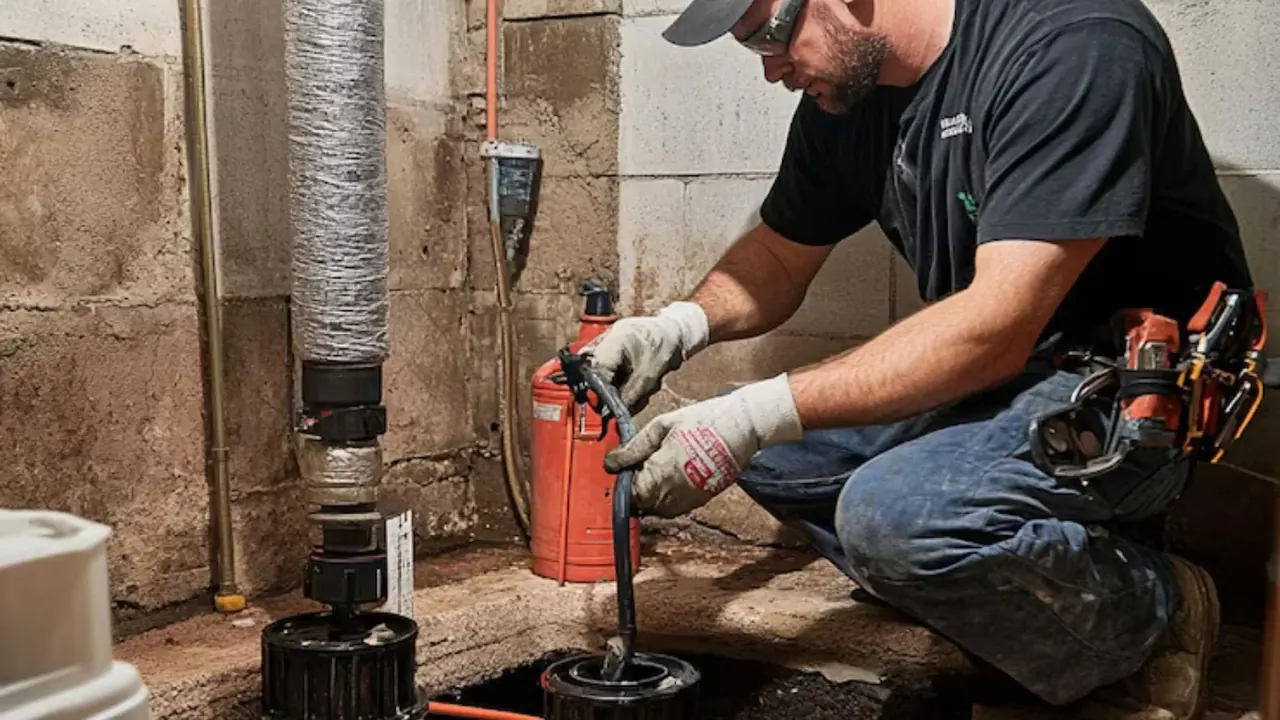
Pedestal or submersible?
Both lift water out of a basin. They differ in noise, lifespan and what they tolerate.
| Feature | Pedestal | Submersible |
|---|---|---|
| Motor location | Above the basin | Underwater inside it |
| Noise | Louder | Quieter |
| Runs hotter? | Cooler, motor is dry | Cooled by the water around it |
| Debris tolerance | Poor | Better, with a strainer |
| Best for | Shallow, tight basins | Most finished basements |
How a sump pump gets installed
A new install into an existing basin is a short job. Starting from bare slab takes longer.
- 1
Pick the low point
The basin sits where water collects, usually near a wall or corner where drain tile enters. The plumber confirms with a level and by watching where water runs.
- 2
Cut and dig
The slab is cut with a saw, the soil dug out, and a gravel base laid. The basin is set so its rim sits level with the floor.
- 3
Set the pump and float
The pump sits on the bottom or on a brick, not in gravel. The float needs room to rise without hitting the wall.
- 4
Add check valve and discharge
A check valve above the pump stops water flowing back. A small weep hole in the pipe below it prevents air lock.
- 5
Seal and test
A sealed lid keeps radon and humidity out of the room. Pour water in until the pump starts and watch the discharge outside.
The discharge line decides whether the pump helps
A pump that dumps water next to the foundation simply recirculates it into the same soil. The discharge line should carry water well away from the house and end where it drains downhill and away from neighbors.
Do not connect a sump discharge to a sanitary sewer line. Direct it to open ground or to an approved drainage route. In winter, a buried discharge pipe with a pop-up emitter or a longer run helps keep the outlet from freezing shut.
Why a backup beats a bigger pump
Pumps fail for two common reasons: a stuck float and a power outage. A larger primary pump fixes neither. A second pump on its own float and battery covers both, and a high-water alarm tells you when the first one has quit.
Test the backup battery on a schedule, and replace it as its maker directs, because a dead battery is the same as no backup.
Have a basin with no pump, or a pump that runs constantly? Call (317) 740-1302 and describe it.
☎ Call (317) 740-1302What to ask in Avon before you install
Avon's sewer service is the West Central Conservatory District, so ask the district what it requires for a sump discharge before you plan the route. Call the Avon Planning and Building Department at 317-272-0948 to ask whether your install needs a permit, since rules vary by job.
Avon also runs a stormwater utility, which matters if you plan to send water toward a street or swale. Electric service differs by address: Duke Energy, Hendricks Power Cooperative and Indianapolis Power and Light all serve parts of the area, so ask your provider how outages are handled, because a storm that floods a basement often takes the power too.
Source type: town building department page, town stormwater utility fact sheet and town utilities pageFeatures worth adding
Put these on your written list when you compare plumbers.
- A battery backup pump on a separate float and circuit
- A high-water alarm that sounds before the basin overflows
- A sealed, gasketed lid
- A cast iron or quality thermoplastic pump body with a strainer
- A union fitting so the pump can be pulled for service
- A GFCI-protected outlet dedicated to the pump
What drives the price of a sump install
Compare itemized written prices from two or three licensed plumbers. These are the lines that change.
New basin or existing
Cutting concrete and setting a new basin takes much more labor than replacing the pump in an existing one.
Pump horsepower and type
Larger pumps and cast iron bodies cost more than light-duty units.
Discharge length and route
A long or buried run needs more pipe, digging and a call to 811.
Backup system
A battery pack, charger and second float add parts and labor.
Electrical work
A new outlet or circuit needs an electrician and may need a permit.
Homeowners policies typically respond to sudden and accidental damage and typically exclude groundwater and seepage and the failed pump itself, so ask your carrier whether you hold water backup coverage.
Call (317) 740-1302 for the real number on your install.
What a homeowner can do and when to call
A homeowner can test the pump with a bucket of water, clear a debris-fouled float and clean the intake screen. Replacing a pump in an existing basin with a union is a reasonable DIY job for some people.
Cutting the slab, running a new discharge, wiring an outlet and setting a basin belong with a licensed plumber and an electrician. Our sump pump repair team can also inspect a failing pump, and a basement waterproofing plan covers the drain tile that feeds it. Homeowners in Brownsburg and Plainfield ask the same questions.
Codes, licensing and 811
Plumbing work in Indiana follows the state plumbing code (675 IAC 16), and the Indiana Plumbing Commission licenses plumbing contractors and journeyman plumbers. You can check any plumber through the license lookup at mylicense.in.gov before work starts, and you should call 811 before any digging.
Codes and standards decide what is allowed on a given job, so ask which ones apply to yours.
Sump pump questions
Size depends on how fast water enters the basin and how high the pump must lift it. A plumber reads the pump curve against your discharge height. Bigger is not better, since an oversized pump cycles too often.
Usage, water quality and maintenance decide it. Test it a few times a year and replace one that is noisy, cycling too often or old.
If a flooded basement would damage finished space or stored belongings, yes. Power outages often arrive with the storms that fill the basin, so a battery backup covers the exact moment the main pump cannot run.
Call (317) 740-1302, answered 24/7. While you wait, stay out of standing water, never touch the pump or its cord while wet, and move belongings upward. If water is near outlets or the panel, call your electric provider.
Avon's sewer is handled by the West Central Conservatory District, and clear water in a sanitary line overloads the system. Ask the district what it requires, and plan a discharge to open ground instead.