
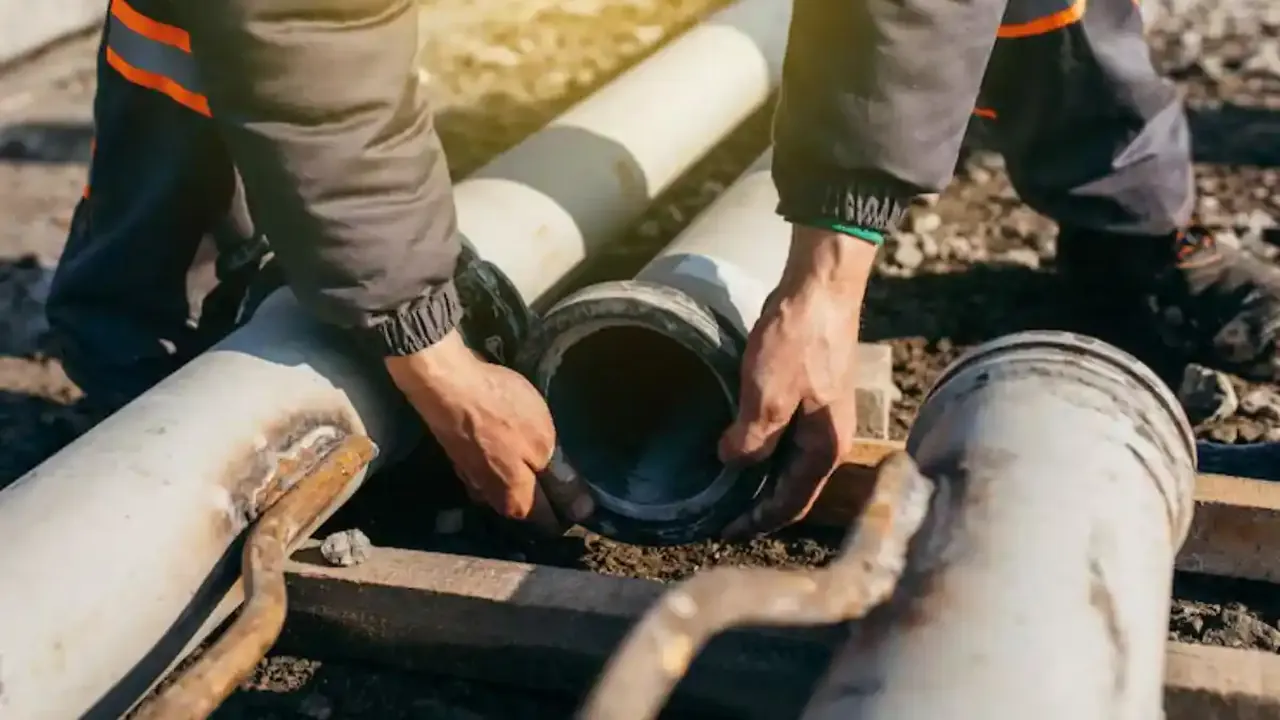
What actually goes wrong inside a cast iron drain
Cast iron rusts from the inside. Wastewater carries acids and grease that eat at the pipe wall, and the rust forms rough scale that grows into a crust called tuberculation. That crust narrows the bore and catches paper and grease, so the line clogs again a few weeks after each cleaning.
The outside fails too. Iron sitting in wet soil or under a slab corrodes through, and a heavy iron pipe can also crack when the ground shifts under it. A cracked pipe lets soil wash in, which leaves a void and a low spot where waste collects.
Repair options at a glance
Which route fits depends on what the camera shows, not on the age of the pipe alone.
| Option | Fits when | Trade-off |
|---|---|---|
| Spot repair with shielded couplings | One cracked or rotted section, rest of pipe solid | Leaves older pipe on both sides |
| Pipe lining | Pipe has its shape but is scaled or has small holes | Needs a clear, round path and no collapse |
| Full replacement | Cracks along the run, collapse, or a belly full of standing waste | Most digging or floor work |
| Cleaning only | Scale is moderate and no breaks | Buys time, blockages tend to return |
Pipe replacement and trenchless choices are covered in more detail on our sewer line repair page.
Signs the cast iron line is failing
These are the patterns that usually send a plumber to the camera first.
- Repeated main line clogs that clear and then return within weeks
- Gurgling in a tub or toilet when another fixture drains
- A sewer odor in the basement, crawlspace or near a floor drain
- Rust-colored water or flakes in the cleanout when it is opened
- A soft, sunken or unusually green patch in the yard along the sewer route
- Slow drains in every fixture on the lowest level
Slow drains in an older house and no clear cause? Call (317) 740-1302 and describe what you are seeing.
☎ Call (317) 740-1302What a repair visit involves
A sound job follows the same order every time.
- 1
Cable or jet the line
The tech clears the blockage first so a camera can pass. Heavy scale may need several passes with a cutting head.
- 2
Run the camera
A push camera shows scale depth, cracks, offset joints and bellies. It also reads out the distance to each problem, so the repair can be located on the surface.
- 3
Locate and mark
A locator tracks the camera head from above. Call 811 before any digging so buried utilities are marked.
- 4
Cut out and replace
The bad section is cut out with a chain snap cutter, then new pipe goes in with stainless-banded no-hub couplings. Cast iron to plastic transitions use a rubber coupling rated for the mix.
- 5
Test the result
Run water through and recheck with the camera or a water test before any trench is closed.
What you can do yourself and when to stop
Safe homeowner work is limited to observation. Pour a bucket of water down the lowest drain, listen for gurgling at other fixtures, and look inside the cleanout cap if you can open it. Photograph anything you see and note the date.
Stop before you cut, rent a chain cutter or dig. Cast iron is heavy, cuts without support can drop a whole stack, and a wrong coupling leaks into the wall. Anything that touches the main sewer line, a stack or a section under the slab belongs to a licensed plumber, including crews who also work in Plainfield and Brownsburg.
What Avon homeowners should know about the sewer side
The Town of Avon lists the West Central Conservatory District for sewer service. Before a repair, ask the district where its responsibility ends and yours begins, because the answer decides who handles a failure near the connection.
Much of Avon was built during the rapid growth after 2000, so cast iron is more likely in older homes and in interior stacks than in newer drain lines. Ask the Avon Planning and Building Department whether your repair needs a permit, since rules vary by job. Indiana licenses plumbing contractors, and you can check any contractor at mylicense.in.gov.
Source type: town utilities page and Indiana Professional Licensing AgencyWhat drives the price of a cast iron repair
A fair price follows the pipe, not a flat rate. Ask for it itemized in writing.
Length of pipe affected
A single repaired section is a short job. A full run costs more in materials and labor.
Depth and location
Pipe under a slab or deep in the yard needs more excavation or floor work than a visible basement stack.
Access and restoration
Concrete, landscaping and finished walls all add work after the pipe is fixed.
Repair method
Coupled-in spot repairs, lining and full replacement use different materials and equipment.
Permit and inspection
Some jobs need a permit, which adds scheduling. Ask the Avon Planning and Building Department.
Homeowners policies typically respond to sudden and accidental damage and typically exclude wear, corrosion and the failed pipe itself, so ask your carrier before you assume coverage.
For the real number on your pipe, call (317) 740-1302 and we will explain what the camera findings mean.
Codes, licensing and 811
Plumbing work in Indiana follows the state plumbing code (675 IAC 16), and the Indiana Plumbing Commission licenses plumbing contractors and journeyman plumbers. You can check any plumber through the license lookup at mylicense.in.gov before work starts, and you should call 811 before any digging.
Codes and standards decide what is allowed on a given job, so ask which ones apply to yours.
Cast iron drain questions
There is no fixed lifespan. Wall thickness, soil conditions and what has gone down the line all matter. A camera inspection tells you the condition of your pipe better than its age.
Small interior work is possible for a skilled DIYer, but connecting to a main or stack carries leak and support risks. Indiana licenses plumbers, and a mistake behind a wall can be costly to find. Call us for anything beyond a visible fixture drain.
Our sewer line repair plumbers can walk you through the options once the camera has shown what is wrong.
Lining avoids a trench and works when the pipe is round and unbroken. It does not fix a collapse or a deep belly. The camera result decides, not preference.
Our line at (317) 740-1302 is answered 24/7. If sewage is backing into the house, stop using water, keep people away from the area and call. We offer same-day appointments when available.
Ask the district directly where its responsibility ends. As a rule, the pipe inside your property and its connection to your house is yours to maintain, but the exact boundary can vary, so confirm it before a repair starts.